Remote places – Samoa

Nadya Domashneva, Designer, Sаmoa

Samoa is certainly a remote country for many of us. Its very name and the beautiful way it sounds invites exploration. Nadya Domashneva is not a native Samoan, yet for this very reason you have an opportunity to discover this land through her eyes: the eyes of someone who fell in love with it while striving to keep a realistic outlook. Let yourself get carried away by the words of a woman who adopted a life in a country that is very diff erent from her native Russia.

How did it happen that a girl like you, who comes from Russia, came to live in such a distant and outlying place?

I was born and lived in Russia until my 24th birthday. Life in Moscow is very hectic and fast. Time flies there like nowhere else (apart from Tokyo, people say). I really wanted to slow down or to do something to remember, not just metro-work-metro-sleep, metro-work etc. So, I went to Australia to study Graphic Design for 1 year. During this year I met my future husband, who came to Australia from Samoa (I knew of no such country on planet Earth) to visit his relatives. So we went back together and got married about a year later.

Was it difficult to get accustomed to the local climate and inhabitants of this wonderful country? Did you encounter any problems during your early days?

The climate was all right, because I had already experienced the Australian heat. The inhabitants of this country are friendly, and at first it seems that there is nothing very different. But later I discovered that there is a huge difference between us. Their family structure, their very well preserved traditions from the old days, the power of the Christian church and even their climate and location on the world’s map affect their attitude towards each other, the way they see and understand things and their humor. Two things you always have to consider: traditions and Christian ways.

It was a problem to get used to lizards, giant cockroaches, worms etc. Plus as it is an island in the middle of the ocean – the food supply is quite limited. The magic words “chocolate from overseas” remind me of the times in the Soviet Union, when good stuff could be found only in foreign countries. And, coming from Moscow, the lack of entertainment was quite shocking in the beginning. Clubs here are only open until midnight, we have one cinema and there is a circus, too. Nothing is open on Sundays, because it’s a church day. But now, after almost 2 years of living here, it seems normal and right.

What is the thing most particular to Samoa, when you compare it with the country of your origin?

It’s the landscape and, most of all, the skies! Skies are so beautiful! It’s like a dome covering the island. At night you can see stars at eye level all around you. Stars start at the horizon. You can see the Milky Way very vividly (because we are close to equator and have no pollution at all), and the moon has the shape of a smile, not of a „C“ like in the Northern Hemisphere. In the daytime, clouds are incredibly tall. They pile on top of one another. I guess it’s because of the evaporation from the ocean, which, by the way, you can see from almost any place on the island.

And on the other hand, can you think of anything that these two countries have in common?

Surprisingly yes. I think the common thing is how we raise our children. We are quite strict to them, compared to Australian, American or even European parents. From a young age Samoan and Russian kids know the rules and don’t run around disturbing people. I think Samoan methods are even more strict than Russian ones. In a traditional Samoan family the young ones are responsible for almost all of the household chores, they ought to serve adults, which seems a bit too much for me, but that’s the way people have lived here for centuries.

Is there anything about Samoa that you will never get accustomed to and on the contrary, is there anything you would never change about it?

Well, I guess I will never be able to live in a traditional Samoan house, which has no walls, only roof and posts. I had difficulties even to get accustomed to calling it a house. Though it’s really nice to spend a couple of days on the beach sleeping in one, minimum comfort, maximum nature.

However, as I already mentioned, I believe that Samoa has the most beautiful landscape. It is hard to believe that all these colors and the variety of plants really exist. The fact that you can literally step into paradise just by opening the door (that is, if you even have one) is fascinating. As well as the fact that you can swim in the Pacific Ocean every day if you like, and it will take about 10 minutes to get to the beach. It’s a crazy thought for someone coming from the Ural mountains, where my hometown is.

Do you plan to stay in Samoa forever or do you and your husband ever consider moving to any other places?

I would not mind staying here forever, it’s a great place to raise kids and enjoy life as it is. People have lots of time to spend with their families and friends, time doesn’t fly so fast. You can find time for everything. Work is not the most important thing in the world. To me, it looks like people appreciate true values over here much more than people from big cities.

Many people from America, Australia, New Zealand and some from Europe stay here for the rest of their lives. But, we might try something else. It would be nice to have a New Zealand passport to make it easier for our kids to travel and study overseas.

Do you ever visit your home in Russia and what do you feel when you’re going back there?

I went to Russia only once, after more than a year of travelling. I can’t say that I felt very good in Moscow. Everyone wears black, everyone is rushing, everyone is kind of grumpy… Though I know that is only a facade.

I was so happy to see my relatives and friends, they are the best, of course. But, as for the surroundings, the city… I don’t think I want to live in such a big place anymore. In fact my best time in Russia was when we went with couple of my friends to my country house, away from the noise and transport of the city (life in Samoa reminds me that place a lot with its relaxing on the edge-of being-boring atmosphere). Though before I went to Australia I used to be fond of clubs, parties, and restaurants. I had enough, I guess.

How did you learn about the Week of Life project and what do you think about it?

It’s kind of funny. My husband is an IT worker. Every day he fixes people’s computers and sometimes he sets nice wallpapers on their desktops. He searches for nice ones on the internet. So, some time ago, he found several really nice backgrounds made by someone called Vlad. We assumed that he was Russian. Later on I found Vlad’s website with his beautiful works. He is Russian indeed. In the section where he tells the public about himself was a link to Week of Life website with Vlad’s set. I really loved the idea and started shooting photos of my week the same very day.

I truly admire those members of Week of Life project whose professions are not connected with art, design or other similar things, where being creative is a part of the job. Still they find time and energy to create those beautiful sets and don’t give up on Day 3 or Day 4, when it becomes less entertaining and more obligatory. But, the feeling when everything is finished and uploaded is great! All the effort is definitely worth it!
Weeks of Nadya Domashneva

Let's meet Zdeněk Dvořák!

Zdeněk Dvořák, Special education needs teacher, Czech Republic

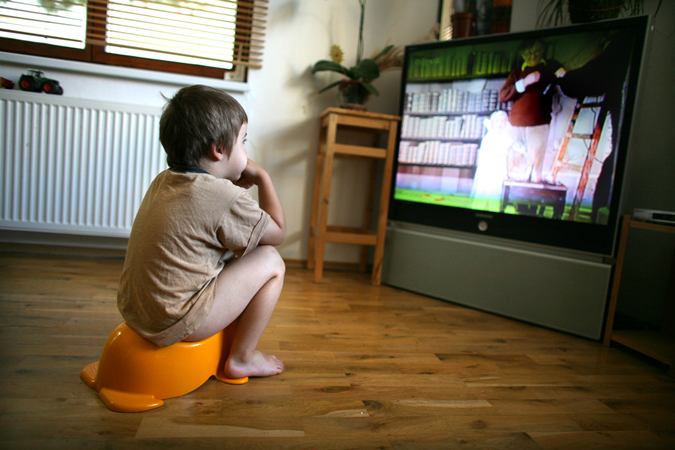
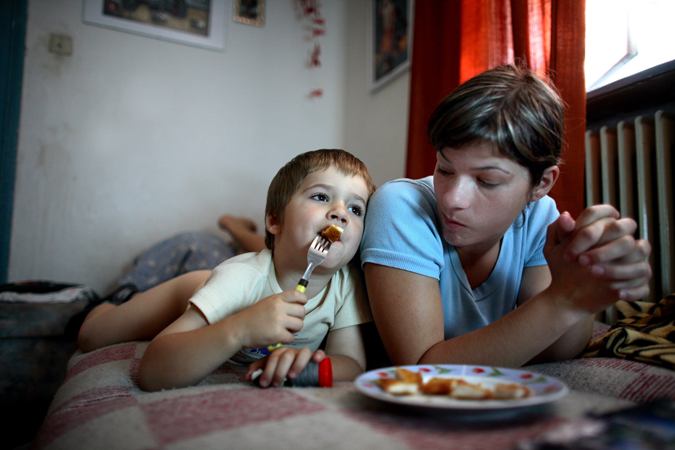
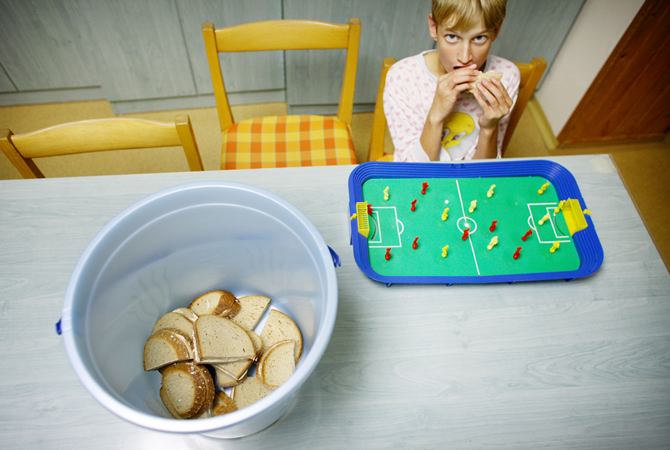
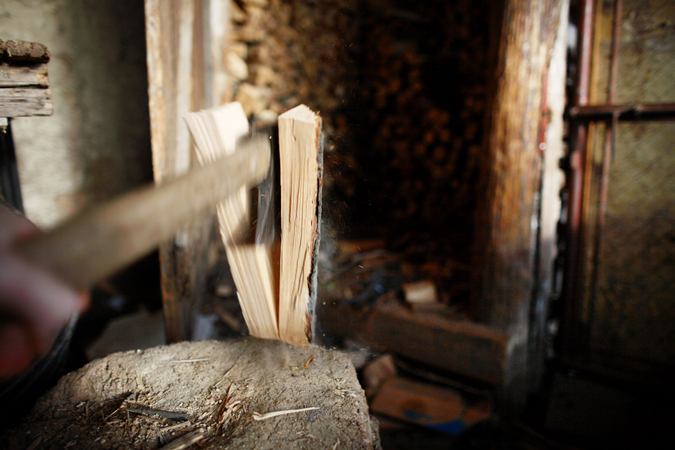
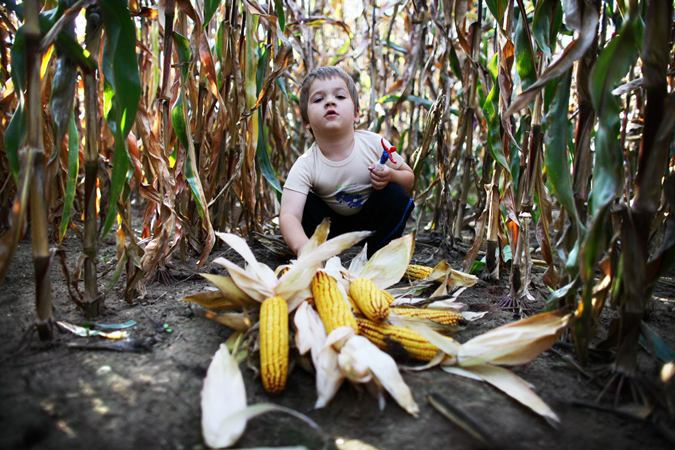
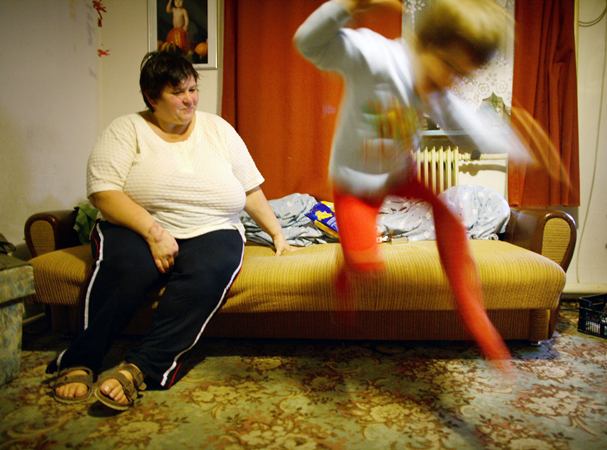
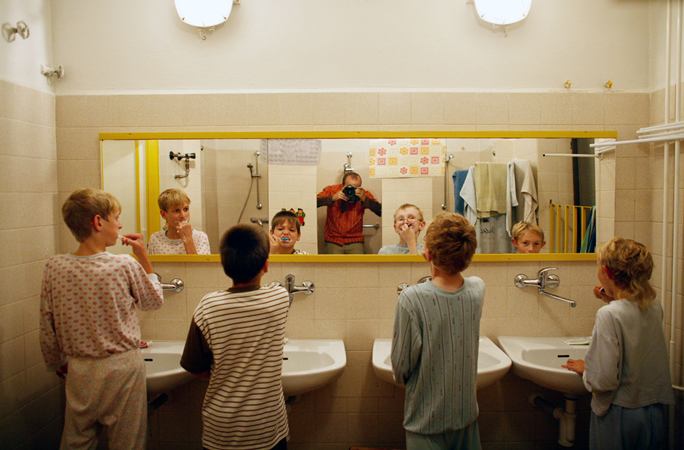
In the simplest way possible, Zdeněk Dvořák’s photographs can be described as an absolute celebration of ordinary life. However, in this case ordinariness is pushed back by atmosphere, which radiates from his images; atmosphere that clearly demonstrates that no life is ordinary if it’s lived to its fullest and with joy. We are very glad that we have the privilege to welcome the author of this photographic style in the premiere interview for the new section Week of Life Masters.

When did you first get acquainted with the medium called photography? And how has your relationship with photography developed? Are you an amateur or a semiprofessional?

The medium called photography surrounded me from early childhood. My dad had a tiny dark room and processed his photographs himself. Before the revolution my dad could travel to Switzerland to see his sister, and I remember evenings with slide shows from this incredibly beautiful country to this day. These memories have been in my memory for nearly 25 years and yet it’s as if it were yesterday. He had outstanding equipment for the time, Practica MTL with three lenses. More than ten years ago, it was also my first real camera. During the years, photography became a part of my self and I can no longer imagine a life without the view through the viewfinder. I love documentary photography (especially of the near surroundings) and so this project, too, is very close to my heart. I have a trade license for photographic services, where my dad and I document weddings. It is not enough to earn a living and sometimes the paper annoys me but I cannot venture photographing without it. At first it was my friends’ weddings, then their friends’ weddings and that’s too big of a risk. I use this activity as an opportunity to obtain better equipment for my free time photography and it is my free creative work, which makes sense to me. Thus the label semiprofessional is probably the most appropriate classification.

What is your profession, what are your hobbies and how big is your family?

My profession is a special education needs teacher. My path to this job led through 5 years of studies for a pastry cook and then entering civil military service. I worked for 18 months as an assistant in a home for the mentally disabled in a grange, which practiced hippotherapy. These 18 months determined my course in life, both in terms of work and photography. Other than photography, my hobbies include my family, our animals, and other smaller free time activities. Both my wife and I come from large families. And it is my wife’s family (the Prčíks), which has been my most extensive photographic documentary so far. We have a four year old son Zdeněk.

How did you first come across the Week of Life project and what were your first impressions?

A friend of mine sent me a link to this project a few months ago and later I saw it in other media. It is an extraordinary project. I have behind me successful participation in project 1DEN (1DAY), I entered all the rounds of the VIA LUCIS project and so the Week of Life form is something new and brilliantly conceived. It’s amazing that this worldwide project is run from such a small country like the Czech Republic.

One can feel in your photographs that you know your surroundings very well, can you imagine capturing an environment, which would be entirely unknown to you, just as closely and intimately? If yes, what place attracts you the most?

Exactly! Most of my photographs were created in an environment that is very familiar to me. Directly in my home, at work or by my wife’s parents. The photo documentation at the Prčíks is in its third year and when I don’t have a camera on me, they make fun of me 🙂 I admit that the familiarity of the environment, where I take my photographs constitutes a large part of success. Unknown places, which would attract me, would be somewhere abroad. My dream is the streets of New York or Tokyo.

As you say yourself, you experienced classical photography. But you accepted digital photography as well. What do you think that it gave to the world and took from it on the other hand?

Analog photography is great. In particular, my opinion is that classic black and white film is even in this age still unsurpassed. My friend Petr Vokurek still makes photographs at home on baryta paper by hand and to have the option to hold a photograph, feel the paper and see the grain is a powerful experience. I had a similar experience recently during the handover of photographs by maestro Štreit to an exhibition in Znojmo. But there is never enough time and so I never worked my way to this craftsmanship, although I did soak my fingers in the developing bath quite frequently at one point.
Digital photography enables immediate feedback, the possibility of new views and experiments. I think that many photographs that capture unique moments would never come to life with film in non-commercial conditions. I think that the absolute top of professional digital equipment probably exceeds the abilities of film and I’m looking forward to the time when I’ll set an iso of 6400 or higher and will be able to capture my life moments without paying any regard to poor quality in bad light.

Why do you think people should contribute to a project like WOL? Why should they reveal their private sphere?

As written in the propositions, let’s show what we want to show. Years ago, when moms in villages saw someone with a camera, they ran for their festive apron and children’s jumper for the church, to look good in the photograph. Now everyone hides behind high fences to have their privacy and even neighbors are often strangers. Yet at the same time people share their private world with strangers, for example on Facebook. Why do people travel across half of the globe? To learn about different lands and different people. With this worldwide project we can show them a piece of ourselves not only with the view of the world through the viewfinder but also through a piece of our life we live in our environment.

In your opinion, where is the line between healthy contribution to the cause and exhibitionism in the project?

As I wrote already, let’s show what we want to show. We are all different and either we show a piece of ourselves or we don’t. In the last half a year I have tried to capture my son in views, which would interest not only the close family. I could be criticized for taking photographs of my family but it is my family which I know the best and so I try to translate this into my photographs. Of course, the goal is not to show that my child is the most beautiful in the world, what car I drive, that my wife has the nicest breasts. As I saw in some contributions, it is possible for a photographer to show nearly nothing from his or her intimate life but share, for instance, pictures taken on way to work, free time and so on, while some contributions contained a little too much exhibitionism for my taste…

When you look around at world photography competitions, what do you see? What impressions do the photographs and themes that dominate them have on you?

I follow competitions such as World Press Photo. The last winner with the theme execution appealed greatly to me and as for its theme, it applies to the whole world. The theme of war and human suffering appear frequently in photographs and it is of course part of our world but at times it seems that perhaps nothing else goes on in half of our planet. With respect to theme, I am always interested in people and their natural environment in their ordinary life. For instance, the overall winner in 2003 in the Czech Press Photo Ibra Ibrahimovič appealed to me with the set Story of Farmer Rajter in this sense.

How do you think the photography medium will develop?

It will continue to be more and more of a medium that will become a part of everyday life. Today, mobile phones without a built-in camera are nearly not manufactured any more. It will be possible to record almost everything but at the same time people will protect their privacy more carefully. A disadvantage will probably be that not everyone owning a camera will also be a photographer. It will still be necessary to learn and have a sense for photography. The advantage is that the quality of photographic equipment continually improves while the price drops. Thereby it becomes a very affordable medium.

In your opinion, what is the real private sphere of a person, the one that should not be disclosed in any media?

This should be a question for every one of us. One person would not allow someone to photograph a beautiful rock garden with a dwarf in front of his house. Another one will present videos from his intimate life on the internet with peace and joy. The line is different for each individual. We must, for example, think whether a photograph of our child playing naked in the swimming pool would not be misused by a pedophile and so on. Everyone must set this limit themselves alone. I’m not afraid to present the family around me in the form of photographs but I would definitely never allow my family to participate in some reality show. In my opinion, these programs deprive people of the most privacy.

Weeks of Zdeněk Dvořák