Canon Digital IXUS 200 IS

Only demanding photographers are willing to carry around heavy equipment. The common user prefers smaller and lighter devices, which can be carried around in a small bag. And if a camera is literally pocket-sized, has an attractive design and interesting functions, its success on the market is guaranteed. This is all true of the Canon Digital IXUS 200 IS.

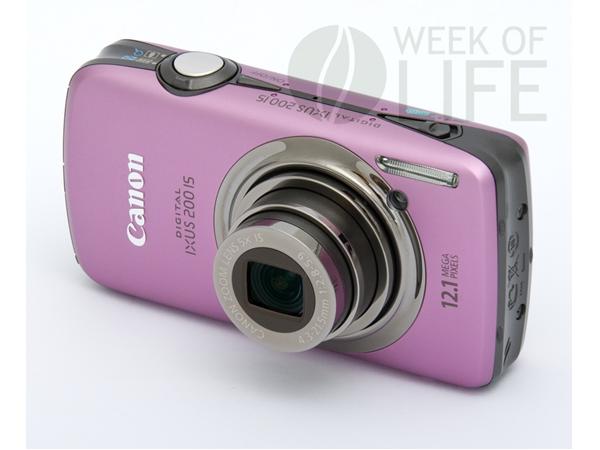
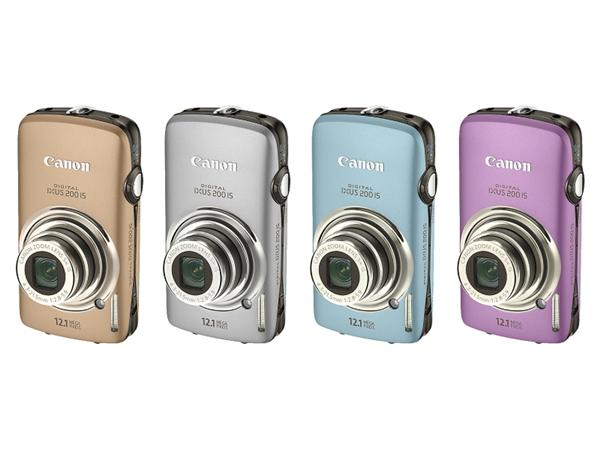
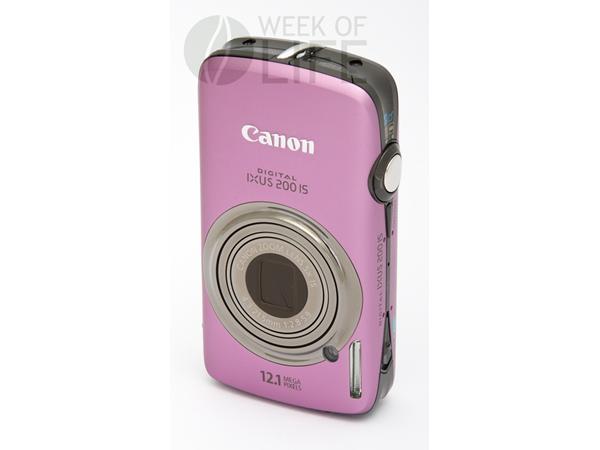
The IXUS line of digital cameras by Canon has always been popular with people who notice and appreciate interesting design. This holds true for the newest model, the IXUS 200 IS, as well. The oblong flat body with round edges is, to a large degree, metal-coated. You can choose from a selection of four colors: gold, silver, light blue and violet. Anthracite black sides elegantly contrast with the high glossy silver rim around the lens.

Foto Canon Foto Canon
Foto Canon

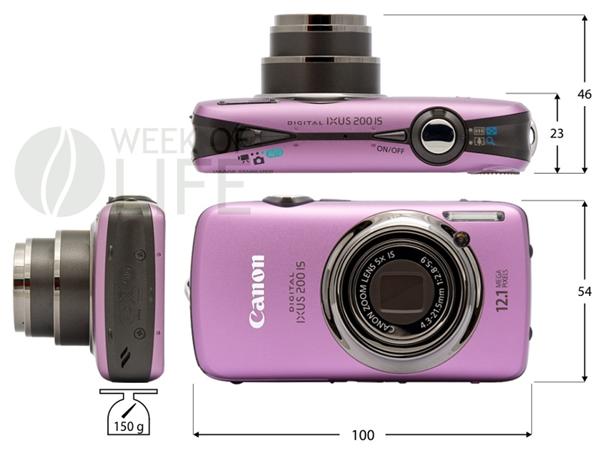
The camera has dimensions comparable to a common mobile phone. In the switched off mode, the lens is entirely hidden in the body of the camera and is automatically protected by a multi-plate cover, so, in fact, nothing prevents carrying an IXUS 200 IS in one’s pocket.

This pocket jewel does not lack, however, for photographic equipment. The device is equipped with a 12Mpx sensor, which may be too much for most users, but this resolution does make it possible to work with greater cutouts from images and do other similar tasks.

Canon IXUS 200 IS – in short
Resolution 12 Mpx
Optics 24–120 mm, stabilization
Video HD (1 280 × 720 px)

The optics of this camera are well worth noting. Canon used a 5x zoom with a range of 24–120 mm. You can therefore work with a wide-angle image of 24 mm, helpful for example when taking photographs indoors but also for wide landscapes. The “long” end of the zoom 120 mm is ideal for creating portraits of your close ones and friends.

Super Features
Touch screen
Wide-angle lens
Pocket size
Attractive design

The lens is also equipped with a stabilizer, which greatly reduces the risk of capturing blurry images, even in poor light conditions.

Foto Canon Foto Canon

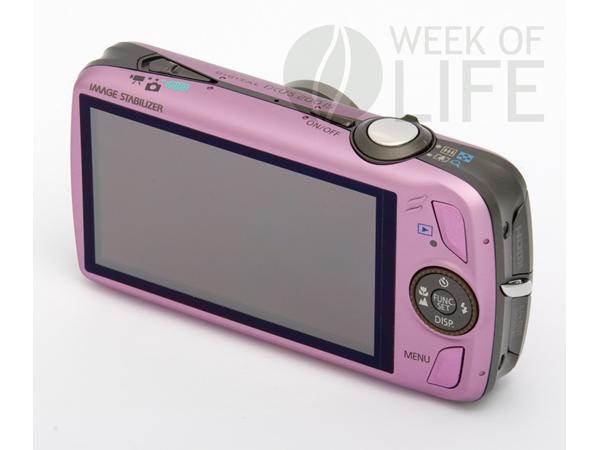
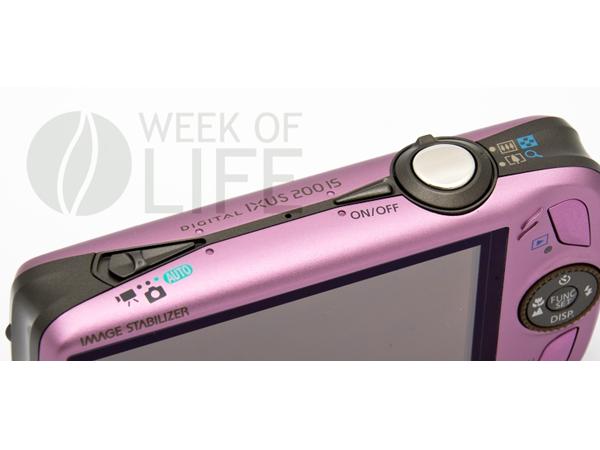
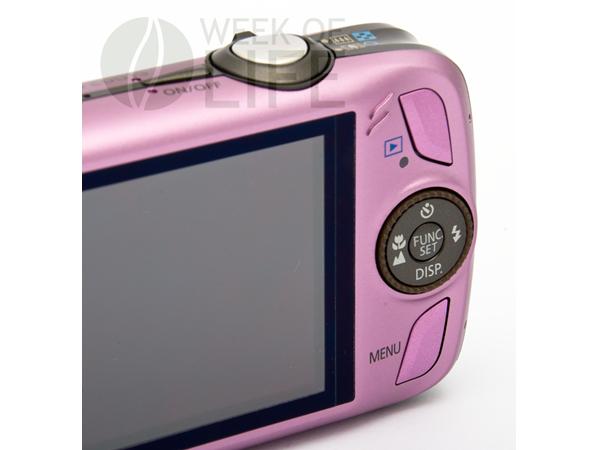
Examining the top and back side of IXUS 200 IS reveals an unusually small number of controls. On the top side you will find only the shutter button with a zoom lever, a small main power switch and a mode selector on the left. The back side includes a large display, two sizeable buttons and a four-way select switch. Canon thoroughly uses all positions to assign direct access to selected functions, thereby eliminating the need for at least four buttons.

Foto Canon Foto Canon

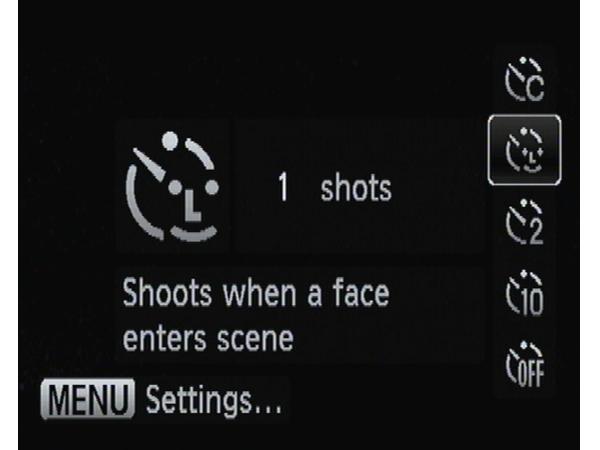
But the other, more significant reason for the austere equipment is the use of a touch screen. While taking photographs you can select the program or scene mode, flash setting and exposure correction by tapping on the touch screen. The option to set a focus point is excellent—you simply point with your finger to the place you wish to focus and the rest will be taken care of by the camera. Even if you move the device slightly, the focus point will stay where you desire it. In viewing mode you can browse through the images by moving your finger across the screen, increase the image’s size by touch, play video sequences, etc. In addition, the IXUS 200 IS is equipped with a touch sensor, which not only automatically turns images on the display while you view them, but also enables you to move individual images while viewing them by moving the whole camera.

Foto Canon Foto Canon Foto Canon
Super Features
Fast optics
Top image quality
Compact size

Overall evaluation

The Canon Digital IXUS 200 IS provides photographs with natural color rendition and renders excellent detail resolution and sharpness of image. You do not have to worry about unpleasant digital noise with this device—up to ISO 400 sensitivity the results are excellent, while at ISO 800 the noise distracts a little, we recommend using the highest sensitivity of ISO 1,600 only sporadically. The camera operates very well, the touch screen is a pleasant above-average feature, and there is a menu in a number of languages. The battery will provide for between 250 to 300 images. The price of more than eight thousand Crowns is rather high in the digital cameras category, but the elegant design (with the option of selecting color), pocket-size and excellent image quality account for the bump in price.

Common price (at the time of the review being published): $352

Basic technical data Canon Digital IXUS 200 IS

Sensor

CCD 1/2,3″
12 Mpx (4 000 × 3 000 px)
Sensitivity ISO 80 to 1,600

Optics

24–120 mm F2.8–5.9
Optical stabilization

Memory medium

SD, SDHC, MMC

Data formats

Image: JPEG
Video: MOV

Video

1 280 × 720 px, 30 fps
640 × 480 px, 30 fps
320 × 240 px, 30 fps
Mono sound

LCD

Screen size 3” (76 mm)
230 000 px
Touch screen

Power supply

Li-Ion battery

Dimensions and weight

100 × 54 × 23 mm (w × h × d)
150 g (incl. battery and memory card)

Foto Canon Foto Canon
Foto Canon

Olympus Pen E-P1

It is easy to get the impression that what is here today may be gone tomorrow when confronted with the rapid evolution of digital photography equipment. But exceptions do exist, such as the Olympus Pen E-P1 which bares the symbol of an established immortal. What makes this camera so exceptional that it has earned a place in the hall of fame of digital cameras?

To answer this, we must first take a quick trip through the history of the Pen brand. Today’s digital model is a descendent of a long line of cameras with the same name, a name that first appeared exactly fifty years ago with the release of the first cine-film Pen in 1959. Over 17 million of these small agile reflex cameras of the so-called “half format” variety were sold worldwide. However, the digital Pen is not – as Olympus claims in its promotion material – a reflex camera, yet it is not a compact camera either. So you may wonder, what concept does this camera then represent?

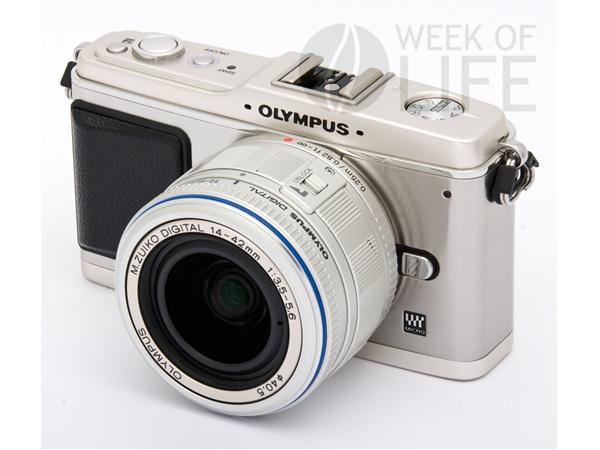
Olympus PEN EP-1 Olympus PEN EP-1

The Olympus Pen E-P1 is a camera of the so-called Micro Four Third (or Micro 4/3) standard. It is specified by a sensor approximately one fourth the size of a cine-film field (17.3 × 13 mm), that is, a chip that is very similar to sensors found in Olympus and Panasonic reflex cameras. The difference is in a different bayonet lens mount. Unlike traditional reflex cameras, the Pen E-P1 has a different size, lens design, and is located closer to the sensor. Due to this precise fact, devices with the Micro 4/3 standard cannot be designed as reflex cameras – the mirror and other components simply do not fit in the small space between the bayonet and the sensor. However, this is not a mistake, but rather the intention of the creators of this new standard.

Olympus Pen E-P1 – in short
Resolution 12 Mpx, sensor stabilization
Optics depending on the lens
Video HD (1 280 × 720 px)

The goal was to reduce the size of traditional reflex cameras, while maintaining their excellent image capturing capabilities. This has been accomplished primarily with the use of a large sensor. Note that digital compacts have a sensor approximately 7 x 5 mm, often even smaller. By removing the mirror, the mechanical parts of the camera have been minimized resulting in a significant reduction in vibration during exposure.

Olympus PEN EP-1

The basic technical characteristic are as follows: The Olympus Pen E-P1 is a camera with a “reflex camera sensor,” exchangeable lenses, but unlike reflex cameras it is designed as a compact device without a viewfinder (even though the mountable viewfinder – as you will learn below – can be user in a limited extent). Even though, on photographs, Pen actually appears as a common compact, which was designed by the manufacturer in retro style, notice carefully its dimensions and, in particular, its weight. With regard to size and weight, Pen lies in-between reflex cameras and compacts.

Olympus PEN EP-1
Photo Olympus

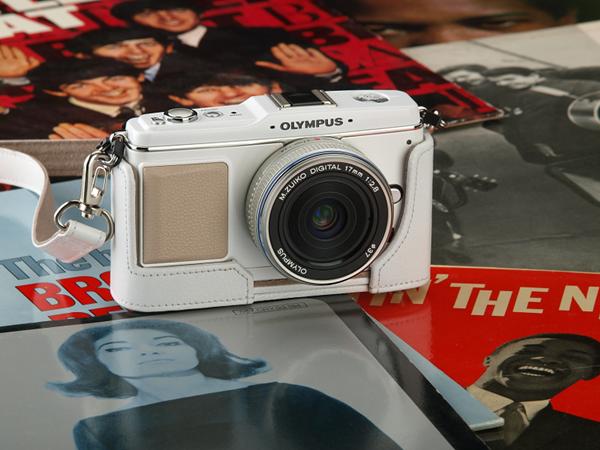
The Pen body itself is manufactured in two versions, which differ in their surface finish. Other than the nearly classic design, which combines polished and ground metal coating on the surface with black complements, it is also possible to purchase a white-coated version with cream-colored parts. The image shows the white version of a Pen with an optional open leather case.

Olympus PEN EP-1

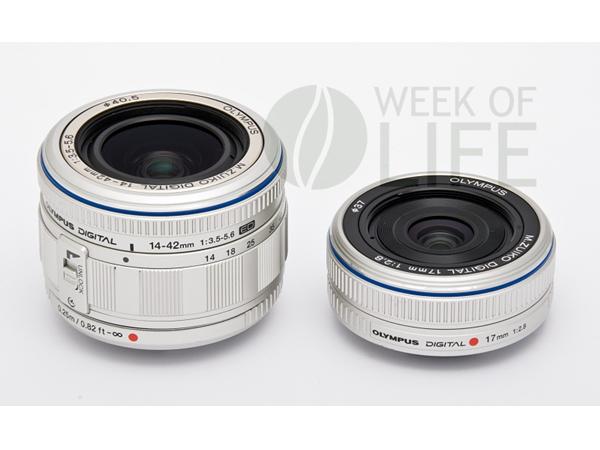
As mentioned earlier, the Olympus Pen E-P1 is “a compact camera with exchangeable lenses.” Because it is a system released only recently, at the moment there are only two lenses available from this brand. One is the basic zoom Olympus M.Zuiko Digital 14–42 mm F3.5–5.6, the other is a monofocal so-called “pancake” Olympus M.Zuiko Digital 17 mm F2.8. To get an idea of the angle of the image with relation to cine-film you have to multiply the focus of the Micro 4/3 system lens by two due to the smaller sensor. For example, 17mm M.Zuiko Digital corresponds roughly to the capturing angle of classic 35 mm cine-film.

Super Features
Top image quality
Retro design
Functions

Because the open Micro 4/3 standard is used not only by Olympus but also by Panasonic, you can also use lenses by this manufacturer for your Pen.

Olympus PEN EP-1 Olympus PEN EP-1

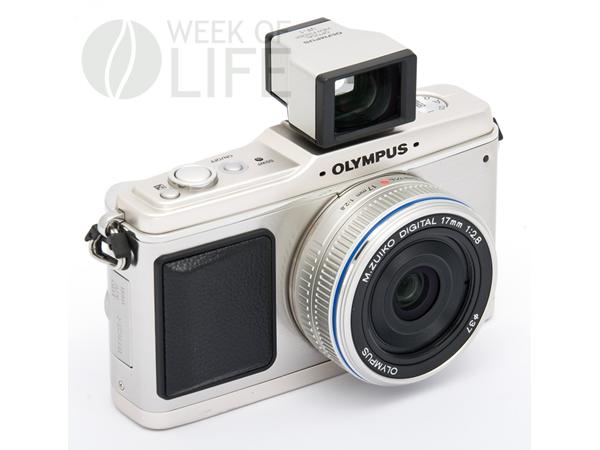
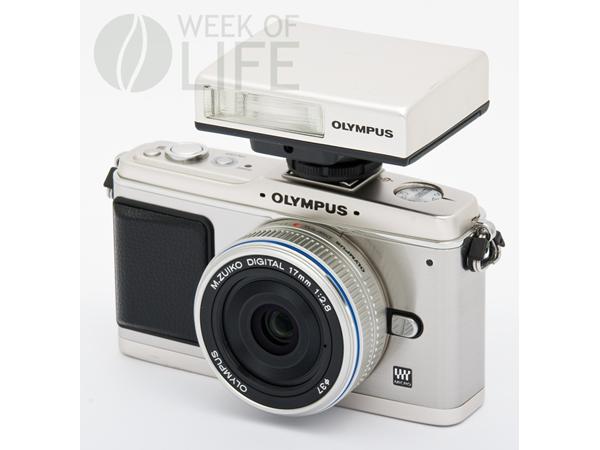
As mentioned earlier, the Olympus Pen does not have an optical or electronic viewfinder. However, if you photograph using the flat lens Olympus M.Zuiko Digital 17 mm F2.8, you can use the external viewfinder, which is part of the Pancake Kit. As you might notice, the manufacturer did not equip Pen with a built-in flash. If you need flash, you can opt for the Olympus FL-14, which was developed just for the Pen. The other external system flashes compatible with Olympus reflex cameras will work with the Pen as well.

Olympis PEN EP-1

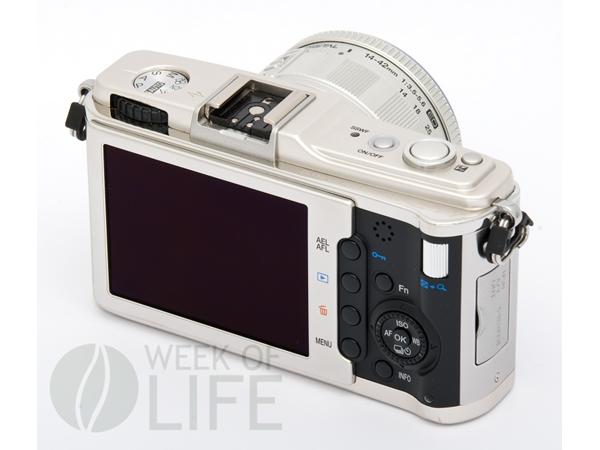
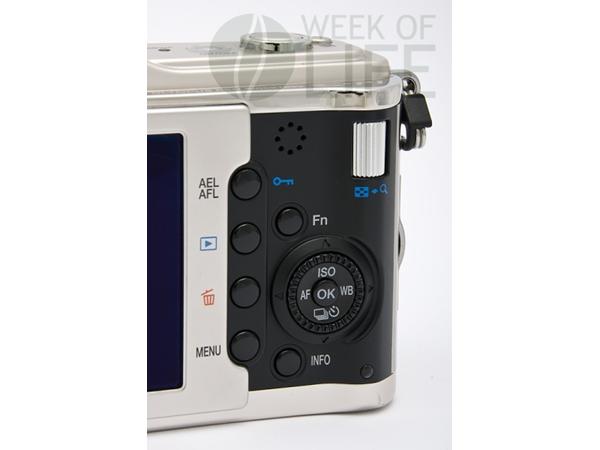
Most of the control elements are located in the right back side of the camera. Notice here two non-traditionally designed but fully functional rollers/control wheels. This label is not accurate however, because the top one has the shape of a vertically oriented roller in the top right corner, the second roller then simulates the circle around the four-way select switch. For example, in the manual exposure mode you use one to set the aperture, the other to set the time, in other modes perhaps also aperture and exposure correction. In addition, it all depends on your user settings because the camera enables the photographer to redefine many functions according to his or her own needs.
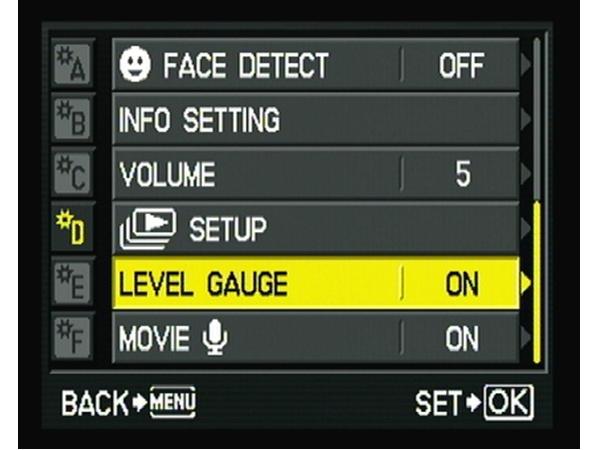
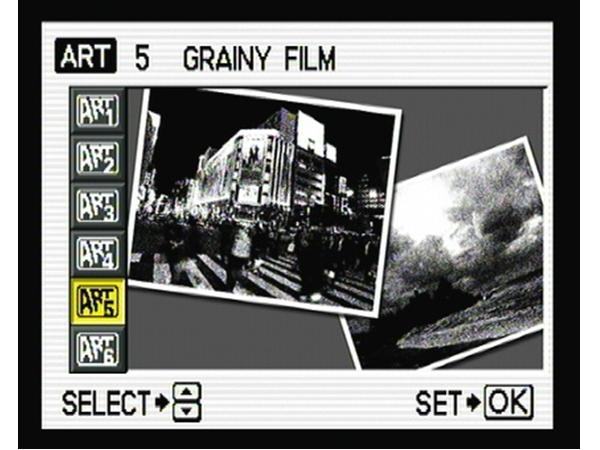
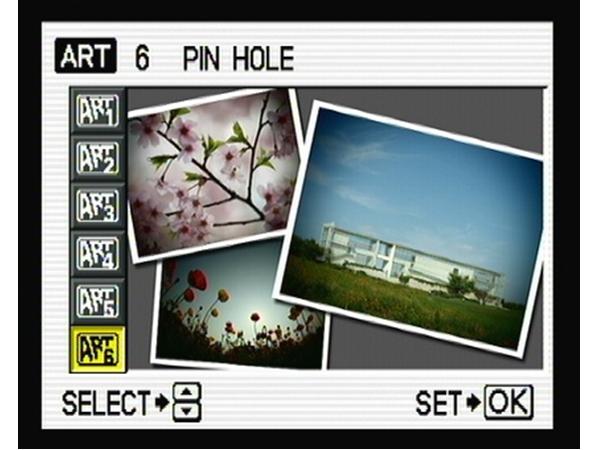
Users of Olympus digital reflex cameras will be immediately familiar with the menu, as it is de-facto identical. This relates to the outstanding availability of functions, which is not lacking in such features as an electronic level, multiple exposure, or the option to join two images directly in the camera. Following the example of the new Olympus reflex cameras, the Pen is also equipped with the so-called ArtScenes – six motive programs, which quite significantly modify an image’s appearance. A few of these are the Camera Obscura, Pop-art and Grainy film.

Overall evaluation

The Olympus Pen E-P1 is an excellent camera for anyone who prefers the size and weight of digital reflex cameras but does not want to give up their high image quality. It represents an ideal companion for travel and for so-called street /report photography. It is less suitable for capturing quick action scenes such as in sports. The image quality is outstanding while the control and interface are intuitive and it has a menu in a number of languages.

Common price (at the time of this review being published)
Body only: $749, £599, €749
Kit including a 14–42 mm lens: $799, £699, €749
Kit including a 17 mm lens and optical viewfinder: $899, £749, €849
Kit including both lenses and viewfinder: $ TBC, £849, €949

Basic technical data

Sensor

Live MOS 17.3 × 13 mm
12 Mpx (4,032 × 3,024 px)
Sensitivity ISO 100 Sensitivity 6,400
Stabilized sensor

Optics

According to lens

Memory medium

SD, SDHC

Data formats

Image: JPEG
Video: AVI

Video

1,280 × 720 px, 30 fps
640 × 480 px, 30 fps
Stereo sound PCM/16bit, 44.1 kHz

LCD

Screen size 3” (76 mm)
230,000 px

Power supply

Li-Ion battery

Dimensions and weight (body only)

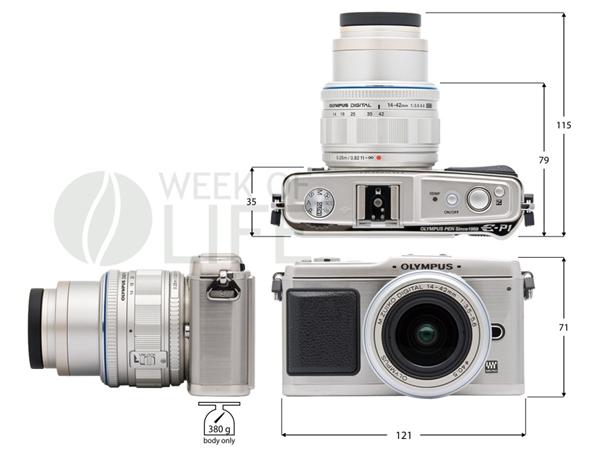
121 × 71 × 35 mm (w × h × d)
380 g (incl. battery and memory card)

Leica D-Lux 4

It is no coincidence that the historically first camera review on Week of Life introduces Leica D-Lux 4. Author of this project, Adolf Zika, himself captured his One Year of My Life using this camera. The majority of compact digital cameras represent simple automatic devices for a common user, one who requires a nice design, simple handling, and of course, good images. But even among pocket devices one can find models that could be labeled professional. The Leica D-Lux 4 belongs at the top of such models.

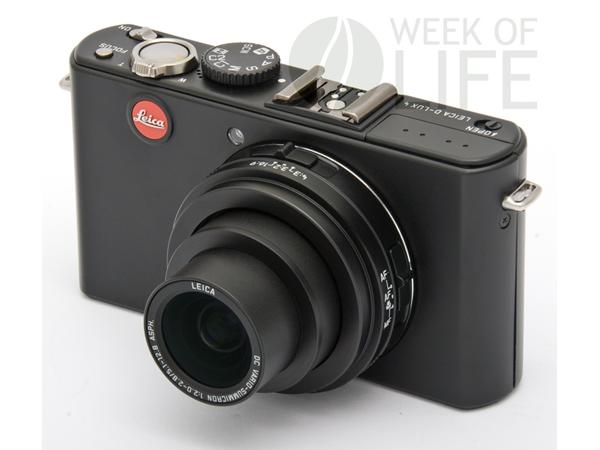
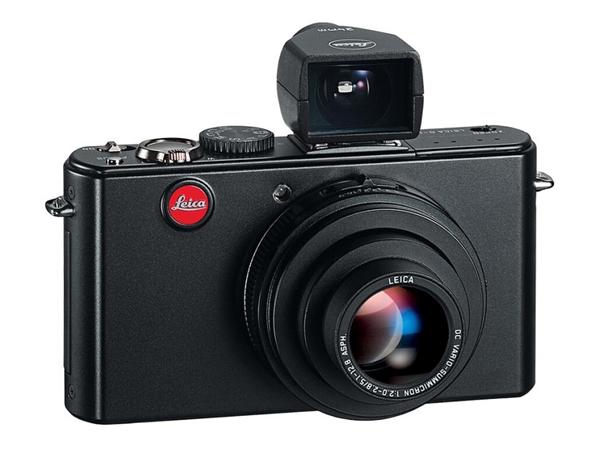
The austere shape of the metal coated black body of the Leica D-Lux 4 with the essential red round logo suggests at first glance that this is not just an ordinary camera. Experienced photographers also notice the hot shoe for external flash on top, which is another unmistakable sign of a state-of-the-art camera.

Leica D-Lux 4 Leica D-Lux 4

The Leica D-Lux 4 is truly a professional compact camera in all aspects. The optics—from the same brand of course—has a not-that-wide range of 24–60 mm, the shooting angles are set from a wide aperture to normal, however the lens speed of F2,0–2,8 is fantastic. Moreover, the lens is equipped with optical stabilization, so you can photograph even in very unfavorable light conditions.

Leica D-Lux 4 – in short
Resolution 10 Mpx
Optics 24–60 mm, stabilization
Video HD (1 280 × 720 px)

The D-Lux 4 is a camera equipped with all exposure regimes P/A/S/M plus common motive programs or full automatics. So even an absolute beginner will be able to handle the device. Besides the standard JPEG it is possible to store image data also in RAW, which enables more accurate and extensive computer modifications, which is a feature for more experienced photographers.

Leica D-Lux 4

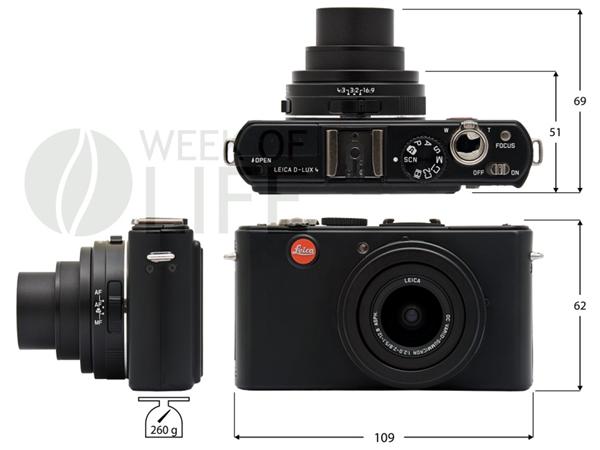
Regarding dimensions and weight, the Leica D-Lux 4 does not deviate from the digital compacts class in any way. The construction leans slightly more towards design rather than ergonomics—the smooth body lacks distinct support for a firmer grip. However, Leica sells a small grip for the right side of the camera as an optional accessory.

Leica D-Lux 4 Leica D-Lux 4

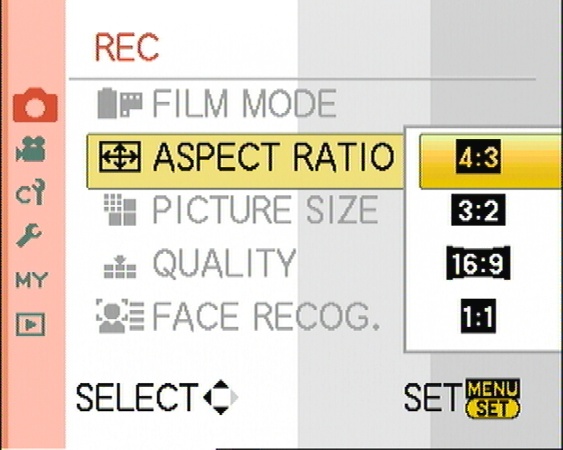
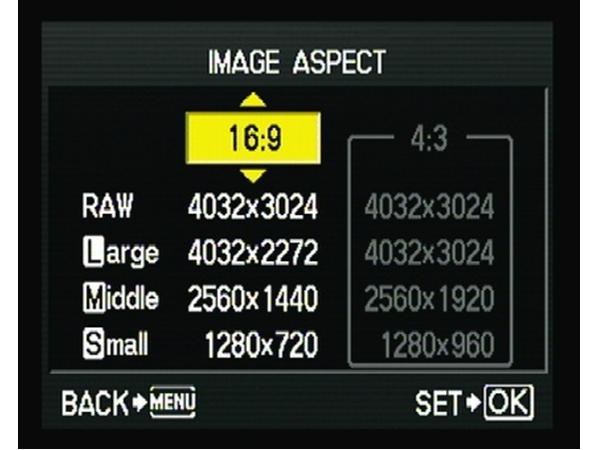
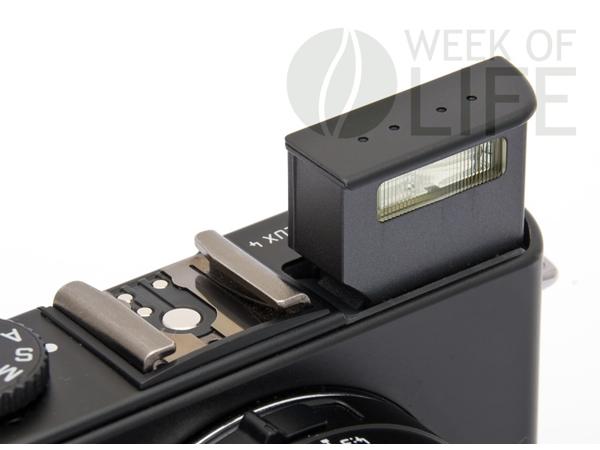
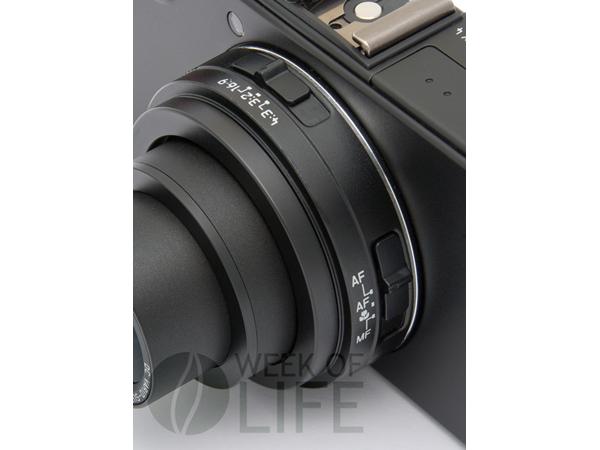
The built-in flash is constructed as retractable and is operated by a small button on the top side of the device. You can also purchase an external flash Leica CF 22 with a higher output. The manufacturer used the surface along the perimeter of the lens ring interestingly—two sliding controllers are placed at this point. With the scroll bar on the left side you can quickly change the focus mode, using the top control you can easily change the image aspect ratio to one of the three options: 4:3, 3:2 or 16:9.

Super features
Fast optics
Top image quality
Compact dimensions
Olympis PEN EP-1

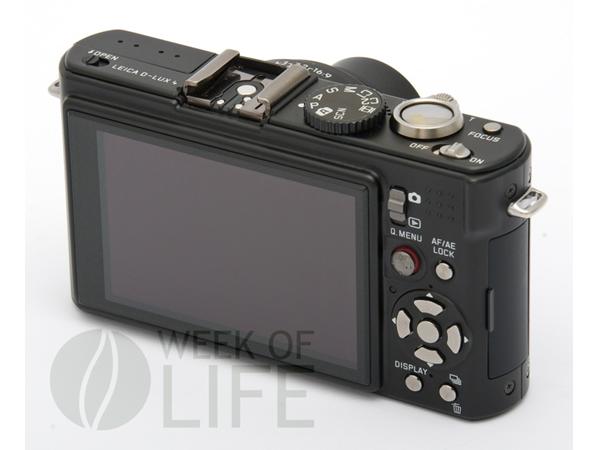
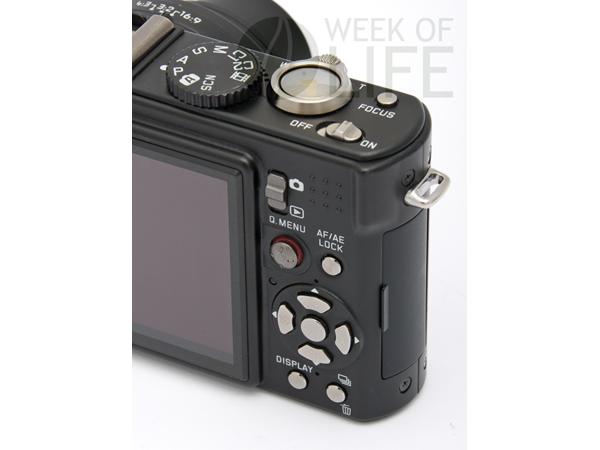
You can find more controls on the right of the back side of the Leica D-Lux 4. Apart from the standard buttons and a four-way select switch, an inconspicuous Q.MENU joystick is also located here, which can be used to enter and operate the so-called quick menu, which contains the most commonly used image parameters.

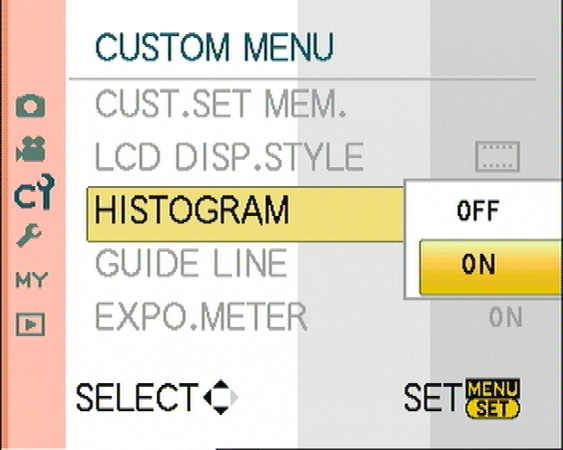
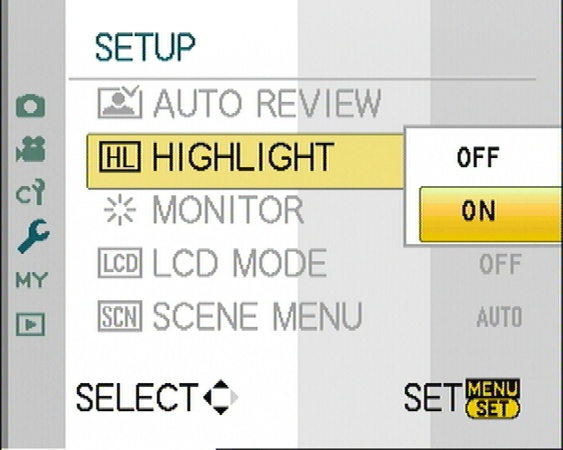
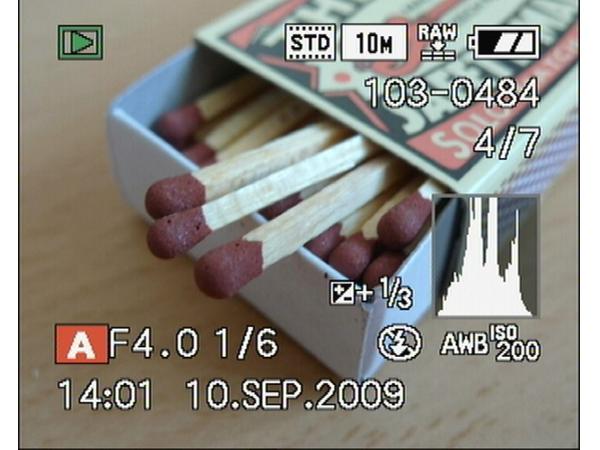
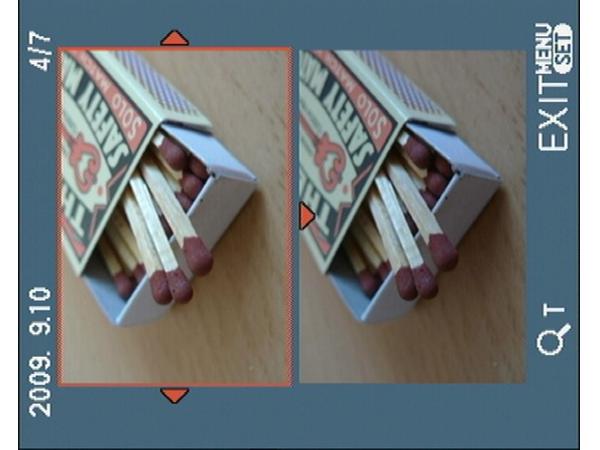
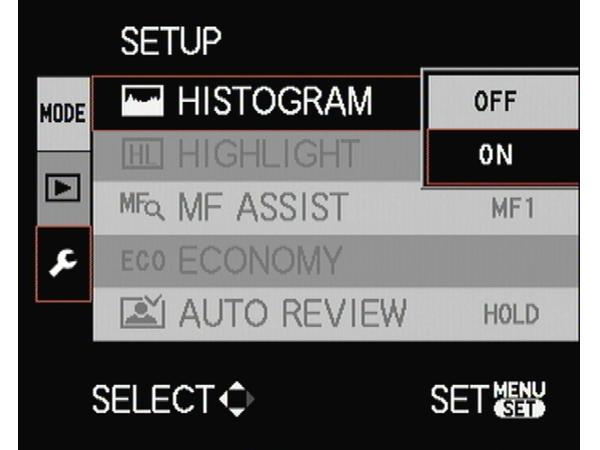
As a state-of-the-art camera, D-Lux 4 enables the display of a histogram. This device is supported in two regimes—realistic for image composition or preview for viewing already taken photographs. This regime also allows the display of an indication of overexposed parts of images.

Leica D-Lux 4 Leica D-Lux 4
Photo Leica

Photographers, who have not gotten used to the method of composing images using the LCD display—despite having an excellent resolution of 460 000 image points and thus providing an outstanding image—can opt for an optional accessory, which is offered by Leica, an external optical viewfinder, which is placed in the hot shoe. But you must take into account that the viewfinder is monofocal—displaying the image from only one perspective, the widest 24mm aperture of the camera.

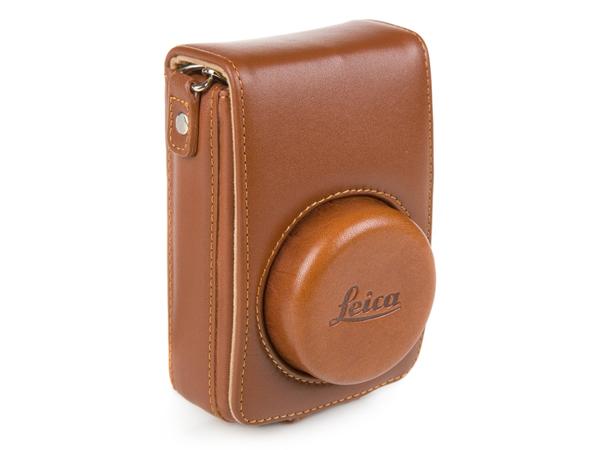
Other accessories which can be purchased, include, for instance, a luxury leather bag in retro style.

Overall evaluation

The Leica D-Lux 4 is a top-of-the-line digital compact, which provides high quality images. You will get the maximum out of this camera if you use the RAW format and convert images using the standard supplied software Capture One (which is a quality ? in itself). However, thanks to well functioning automatic modes, this camera will definitely not be lost in the hands of a beginner either.

A small inconvenience is the price of the camera. For seven hundred USD you can purchase an amateur digital reflex camera, so it can be assumed that the Leica D-Lux 4 will be purchased primarily by true connoisseurs and fans of this legendary brand. It must also be noted that Leica manufactures this model in co-operation with Panasonic. If you purchase the almost identical model Panasonic Lumix DMC-LX3, you will save nearly a third of the price.
Common price (at the time of the review being published): $699

Basic technical data

Sensor

CCD 1/1,63″
10 Mpx (3 648 × 2 736 px)
Sensitivity ISO 80 to 3 200

Optics

24–60 mm F2–2.8
Optical stabilization

Memory medium

SD, SDHC, MMC, Built-in memory 50 MB

Data formats

Image: JPEG
Video: MOV

Video

1,280 × 720 px, 24 fps
848 × 480 px, 30 fps
640 × 480 px, 30 fps
320 × 240 px, 30 fps, 10 fps
Mono sound

LCD

Screen size 3” (76 mm)
460,000 px

Power supply

Li-Ion battery

Dimensions and weight

109 × 62 × 51 mm (w × h × d)
260 g (incl. battery and memory card)

01 02
03 04
05 06
07 08
09 12
13 14
15 10
11