Obyčejný indián

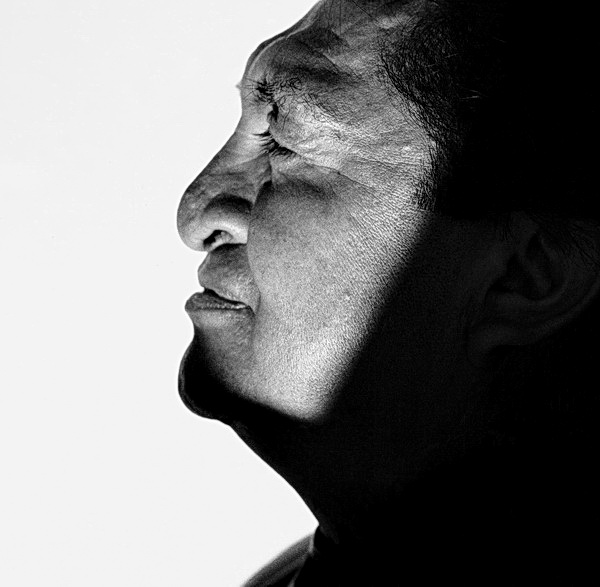
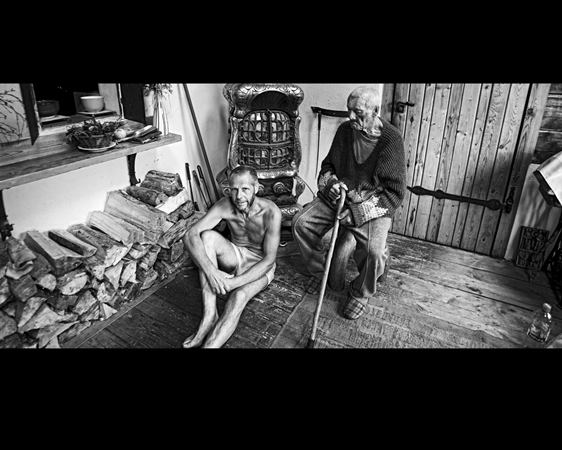
Tak se nabízí otázka, kolik z nás chlapů, když jsme byli malí kluci, si nehrálo na indiány? Jen těžko bychom někoho takového hledali! Já osobně jsem si pochopitelně na indiána hrál taky a musím se přiznat, že jsem vždy chtěl být náčelník. To mi ostatně zůstalo dodnes. Tenkrát jsem ale netušil, že se jednoho dne s jedním takovým opravdovým indiánem setkám osobně a už vůbec jsem netušil, že si s ním vytvořím přátelství s velkým P.

 Obyčejný indián

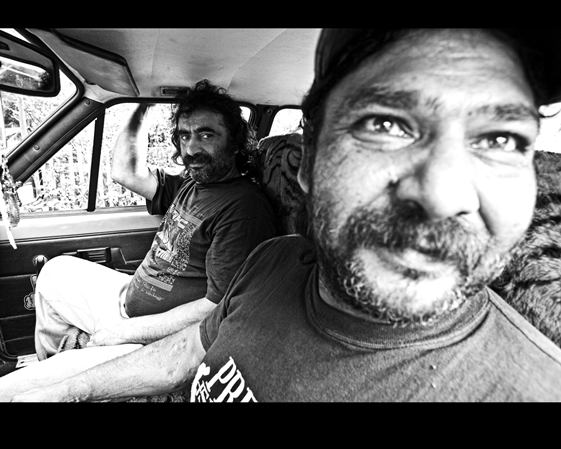
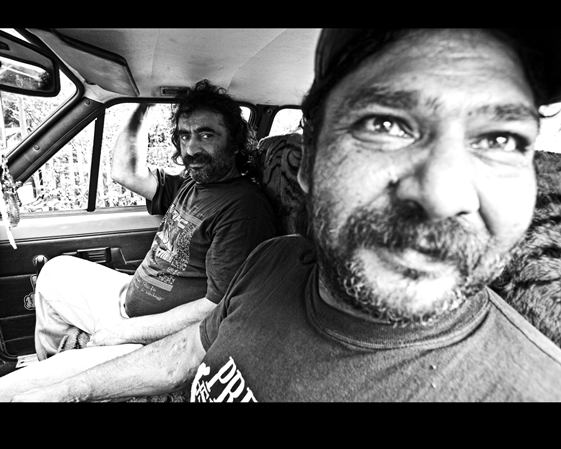
Ten člověk rudé pleti se jmenuje Willford Pariete a v současné době žije v New Yorku! Poznal jsem ho, když jsem poprvé do New Yorku přicestoval před skoro třinácti lety. Kamarádí se už léta s mojí „newyorskou maminkou“ a je jí už léta dobrým, leč velmi tichým společníkem. Na tu dobu mám vzpomínky, které by se daly shrnout do následujících jednouchých vět: Will, co sedí u televize a je mu jedno, na jaký kanál se dívá, Will, co se sprchuje dvě hodiny ráno a večer neb považuje sprchu za jeden z největších vynálezů doby, Will, co se nikdy nerozčílí, protože není už proč, nikdo mu totiž nemůže vzít víc, než jsme mu vzali my bílí, Will, co chce vždycky přidat na talíř a je mu jedno, co se vlastně servíruje, Will, co neví, kde je sever, západ, východ a jih, neboť vždycky věděl, kam jde a tudíž to ani nepotřeboval, či Will, co se absolutně nevyzná v automapě, jelikož ani nemá na ten ďábelskej stroj papíry, a tak mu stačí vyznat se v metru! A tak bych mohl pokračovat dál a dál!

Málokdo z nás si asi dovede představit člověka, který žije už čtvrt století v nejlevnějším hotelu „pajzlu“ v China Town (pravda, teď se přesunul na Staten Island, na metry si však nepolepšil), má sotva deset dolarů na den a přitom je šťastný. Šťastný, jelikož po tom všem, co se ve velké Americe indiánům přihodilo, může alespoň bydlet v tom zapráskaným hotelu nebo ubytovně. On je opravdu spokojený a život bere tak, jak každý den přichází a odchází. Oba rodiče mu zavraždili novodobí obyvatelé a své dvě dcery viděl naposledy před dvaceti lety. Je jim dnes přes třicet! Dostat se k takovému člověku blízko není lehké, ale není to zase tak těžké, jako takového člověka vyfotografovat. A to já jsem bohužel chtěl.

Vše začalo tak, že jsem mu v roce 97 dal při svém odletu dárek v podobě trička Jimiho Hendrixe. Nešlo ani tak o slavného kytaristu jako o ten dárek. Já to myslel docela normálně a ani jsem z toho nechtěl dělat vědu. Will není a nebyl na dárky v životě zvyklý, a tak by se dalo říct, že ho tento odvážný počin trochu vykolejil z jeho bohorovného klidu. Den mlčel a nic neříkal! Druhý den nato ovšem vykolejil on mě, když mi na oplátku věnoval minci, kterou dostal při svém odchodu z protialkoholické léčebny jako jediný důkaz toho, že se zbavil závislosti na alkoholu. Jediný dar, který indián od bílého muže dostal. Nečekal jsem, že by mi mohl darování trička opětovat něčím tak důležitým, jako je právě tato mince! Byla asi tak to jediné cenné, co tento obyčejný indián vlastnil. Tenkrát jsem si uvědomil, že se jedná o opravdové přátelství mezi bílým a rudým mužem! Odjel jsem a za půl roku jsem se vrátil zpět.

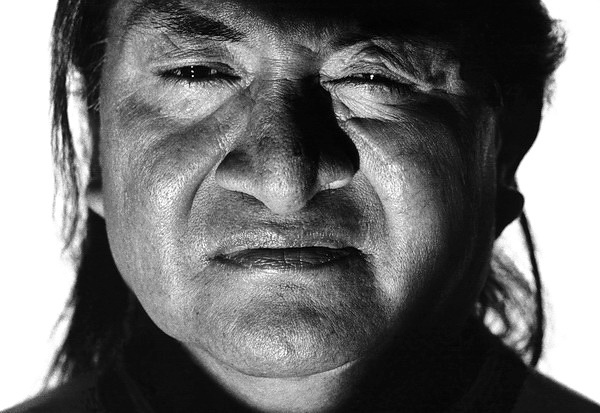
Tentokrát jsem Willa opravdu vyfotografoval poprvé a velmi zblízka. Bylo to velmi zvláštní a plné napětí, ale bylo vidět, že on mi chce dát svou tvář jako důkaz důvěry. Na mě pak bylo, abych té důvěry nezneužil. Po návratu jsem fotografie vyvolal a nechal je pár týdnů uležet. Když jsem se k nim vrátil, zjistil jsem, že je na nich něco divného. Bylo to právě to napětí, o kterém jsem hovořil. Já jsem měl z něho prostě trému. Ty záběry se mi ale opravdu líbily a velmi mě trápilo, že jsem si nebyl jist, zda je mohu použít do svého katalogu, či ne. Nakonec jsem je nepoužil. Prostě tam nebylo to, po čem jsem prahnul. Pak se dlouho nic nedělo, Willa jsem o nic nežádal, ale tajně jsem doufal, že to všechno zopakujeme. Po roce jsem se do New Yorku vrátil a znovu ho požádal. Po jeho tradiční ranní sprše jsem ho za prudkého slunce vytáhl na zadní dvorek před garáž a začal fotografovat. Najednou jsem cítil, že to jde, že jsme oba dva uvolnění a že se vytváří něco, z čeho by v konečné fázi mohla být vidět celá ta indiánská pravda. Nebo spíše pravda o indiánech. Povedlo se to!

 Obyčejný indián

Čekal jsem na tuto fotografii celé tři roky a vyplatilo se. Willa jsem pak ztratil ze zorného pole. Dlouho jsem se v USA neobjevil a tak se mi trochu stýskalo. Po opravdu dlouhé době jsem ho mohl vidět právě skrze WEEK OF LIFE, kde jsem ho konečně spatřil v setu mé NY mum Oliny. Při mé nedávné návštěvě New Yorku jsme se potkali znovu. Bylo to krásné setkání a myslím, že i trochu emotivní. Willa už nikdy fotografovat nebudu, ne snad proto, že by nebyl vhodný objekt, ale proto, že už mě dal maximum a víc už by dát tomu portrétu nemohl, snad jen indiánskou duši, ale ta, na rozdíl od té naší, není na prodej.

Adolf Zika

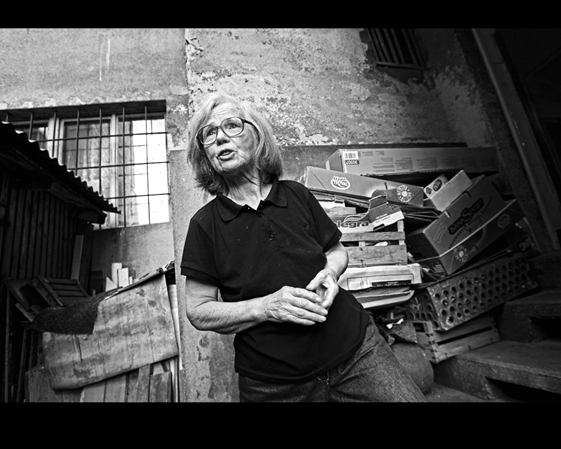
Granny Ben

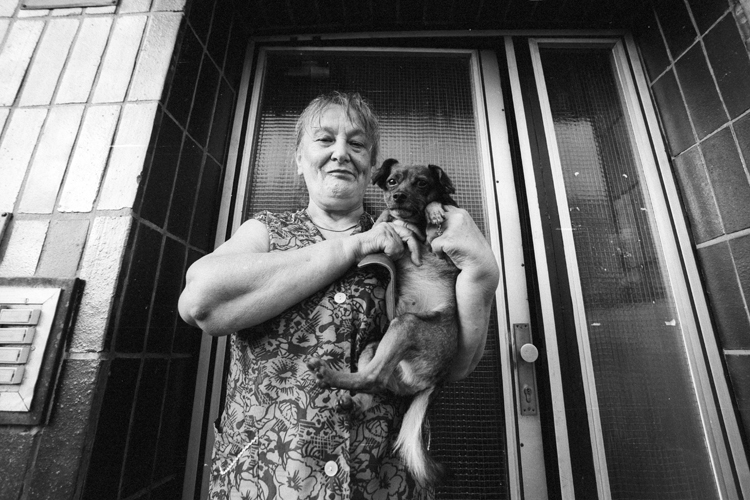
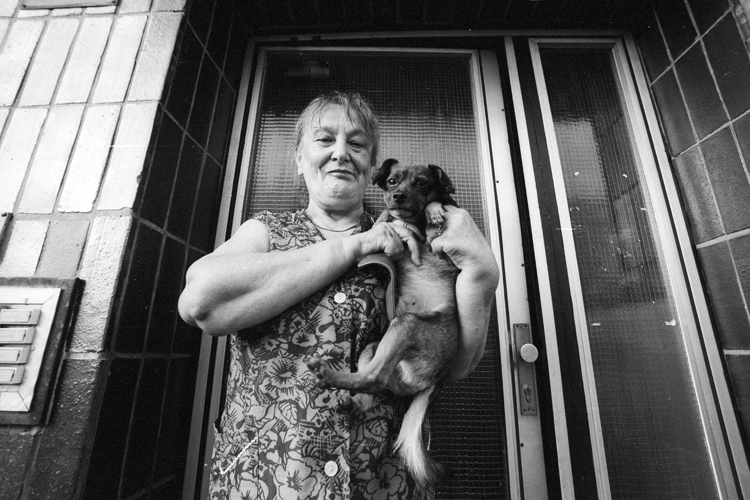
It actually isn’t as much a story of a photograph as it is a story of an old and lonely woman and her small dog. The whole thing took place about ten years ago in one neighborhood in Southern Bohemia in the middle of blocks of panel houses.

Granny Ben

In this ordinary and god-forsaken place, every afternoon small boys played football on the ground between the buildings. The ball was flew all over and bounced in all directions. But of all places, it flew the most into the window of an old woman, who had no one and was a good target for different pranks. And so every other day the same scene occurred, in which the boys begged the old lady for their ball that had dropped into her kitchen and broken dishes or sometimes the window. The lady didn’t want to give up the ball and sent her tiny barking dog Ben at them. It always involved a lot of shouts and tears. And so the lady began to be called Granny Ben.

No one was particularly fond of the lady because Benny got up every day around four o’clock in the morning and the old lady walked him around the whole closed block of homes. As soon as she opened the door at this early morning hour, the dog took a run and barked all over. The lady, still in her nightgown, screamed behind him in a high-pitched voice as loudly as she could: “Benny!!! You bastard, wait!!! Just wait, my darling, just wait till I catch you, I will kill yooou!” Neighbors leaned out of their windows, shouted at the poor old woman various unpublishable swear words and occasionally even threw something at her. And so it was repeated every other morning.

One afternoon, I think it was in the fall, this lady grabbed me under my arm, pressed me against her and said: “Young man, would you photograph me with my little darling? I will hang the photo above the cupboard in the kitchen, so that we wouldn’t be home so alone………”

Sure! Sure my dear, I will shoot such an old hag, who wakes me up every morning, never lets me have a good sleep, not even on Sundays. I will photograph a granny who takes away the football from small boys! And already I was looking for a suitable excuse to quickly and quietly get out of it, but her embrace was so tight that I couldn’t refuse.

“All right, just stand here perhaps, click, click ……….. well and it’s done!!! I will bring you the photo tomorrow.” I didn’t even wait for her to thank me or hug me tightly. The next day I approached the apartment on the first floor of the building, where the lady lived. I had the photograph, 40×50 cm, neatly hidden in a hard paper tube so that it couldn’t be seen at once and so that it would be more difficult to take it out. I rang the bell at the door. “Good morning, here…… here you have the photo….. as you wanted… so, have a nice day and good bye!” I didn’t wait for anything, took the stairs three at a time. Surely when madam sees herself, her embrace would be even firmer and maybe that wouldn’t even be the end of it. Out of breath, I stopped outside under her open windows and I waited to see what would happen. I have never before heard such long and cheerful heartfelt laughter that came and it was one of the greatest rewards I have ever received. Before I moved away from the neighborhood, the lady always nicely greeted me in a high voice across the whole street and once she even invited me to her home for coffee. To see Benny in the golden frame, she said.

Thanks to this photograph I sleep well in the morning. Thanks to this photograph I see the world of old people differently. Since that time I don’t mind dogs barking in the morning.

Incidentally, this photograph was chosen this December for an anthology of documentary photography and photojournalism, which will be published in the USA and which aims to show the ordinary face of this world. But that’s not as important.

Daniel Kaifer

Babka Benová

On to vlastně není ani příběh fotografie, ale spíše příběh o jedné staré a opuštěné ženě a jejím psíkovi. Celý příběh se odehrál na jednom jihočeském sídlišti uprostřed bloku paneláků zhruba před deseti lety.

Babka Benová

Na tomto obyčejném a zapomenutém místě každé odpoledne hráli malí kluci na plácku fotbal. Míč lítal všude možně a odrážel se na všechny strany. Nejvíc však létal do okna k takové staré paní, která nikoho neměla a byla dobrým cílem pro různé lumpárny. A tak se každý druhý den odehrávala stejná scéna, kdy kluci prosili starou paní o míč, co jim spadl do kuchyně a rozbil někdy nádobí a někdy okno. Paní míč nechtěla vydat a posílala na kluky svého malinkého uštěkaného pejska Bena. Bylo u toho vždy hodně křiku a slz. A tak se paní začalo říkat Babka Benová.

Paní neměl nikdo moc rád, protože Beník vstával každý den kolem čtvrté ráno a babka s ním chodila kolem celého uzavřeného bloku domů. Jakmile otevřela v tuto brzkou ranní hodinu dveře, pejsek se rozběhl a štěkal a štěkal na celé kolo. Babka ještě v noční košili se za ním řítila a řvala vysokou fistulí na celé kolo: „Beníčku!!! Ty hajzle, stůj!!! Jen počkej, ty můj miláčku, počkej, až já Tě chytnu, tak tě zabííííju!“ Sousedé se vykláněli z oken, křičeli na ubohou starou paní různé nepublikovatelné nadávky a občas po ní i něco hodili. A tak se to opakovalo každé druhé ráno.

Jednou odpoledne, bylo to myslím na podzim, mne tahle paní chytila v podpaždí, přimáčkla k sobě a povídá: „Mládenečku, nevyfotil bys mne s tím mým malinkým miláčkem? Pověsím si tu fotečku nad kredenc v kuchyni ať nejsme doma tolik sami………“

No to určitě! Milá zlatá, já tak budu fotit takovouhle starou almaru, co mě každý ráno vzbudí, co mi nenechá v neděli ani pořádně vyspat. Já budu fotit babku, co bere malinkým klukům fotbalovou merunu! A už jsem hledal nějakou vhodnou výmluvu, abych se z toho nějak rychle a nenápadně vykroutil, ale její sevření bylo tak pevné, že se nedalo odmítnout.

„Tak si třeba tady stoupněte, cvak, cvak ……….. nóóó a je to!!! Zítra Vám přinesu jednu fotečku.“ A ani jsem nečekal na poděkování nebo pevné objetí. Druhý den jsem se přiblížil k bytu v prvním patře paneláku, kde paní bydlela. Fotografii 40×50 cm jsem měl skovanou pěkně v pevném tubusu, aby nebyla hned vidět a nešla jen tak vyndat a zazvonil jsem na zvonek u dveří. „Dobrý den, tady …… tady máte tu fotečku ….. jak jste chtěla ……tak hezký den a na shledanou!“ Na nic jsem nečekal, schody jsem bral po třech, až se paní uvidí, to sevření bude jisto jistě ještě pevnější a možná nedojde jen na ně. Zastavil jsem se celý zadýchaný až venku pod jejími otevřenými okny a čekal jsem, co se bude dít. Tak dlouhý a radostný smích, který jde od srdce, jsem ještě nikdy neslyšel a byl jednou z největších odměn, kterou jsem kdy dostal. Než jsem se ze sídliště odstěhoval, paní mne pokaždé hezky pozdravila vysokou fistulí přes celou ulici a dokonce jsem byl i jednou pozván k ní domů na kávu. Prý abych viděl Beníka ve zlatém rámečku.

Díky téhle fotografii ráno dobře spím. Díky této fotografii vidím jinak svět starých lidí. Ranní štěkání psů mi od jisté doby nevadí.

Jen tak mimochodem, tato fotografie byla teď v prosinci vybrána do knížky antologie dokumentární fotografie a fotožurnalistiky vycházející v USA , která se snaží ukázat obyčejnou tvář tohoto světa. Ale to není tak důležité.

Daniel Kaifer

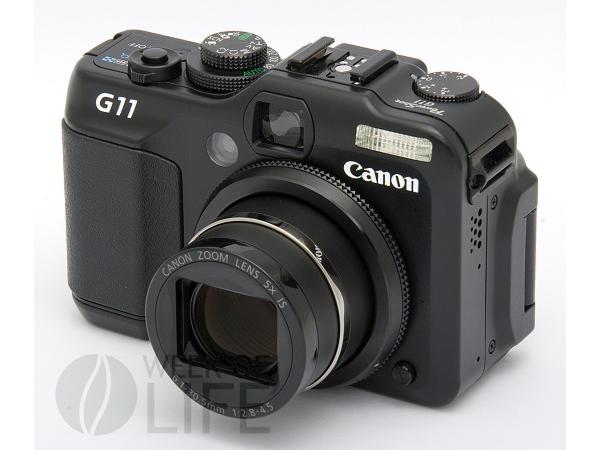
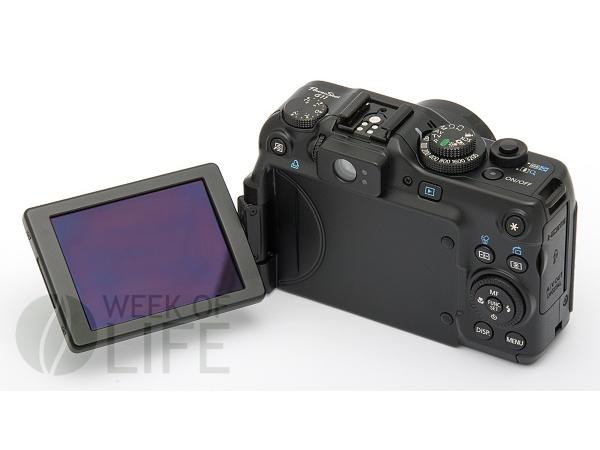
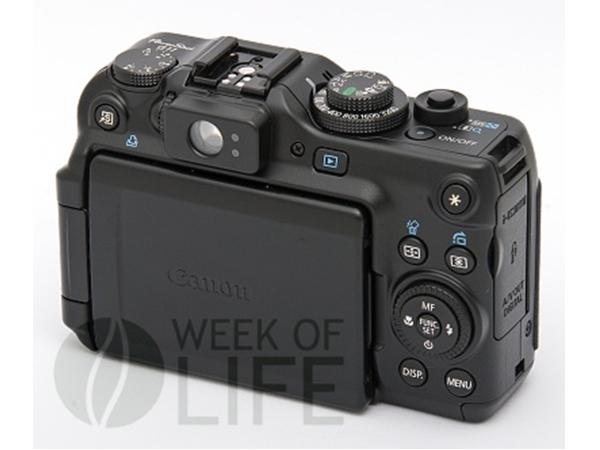
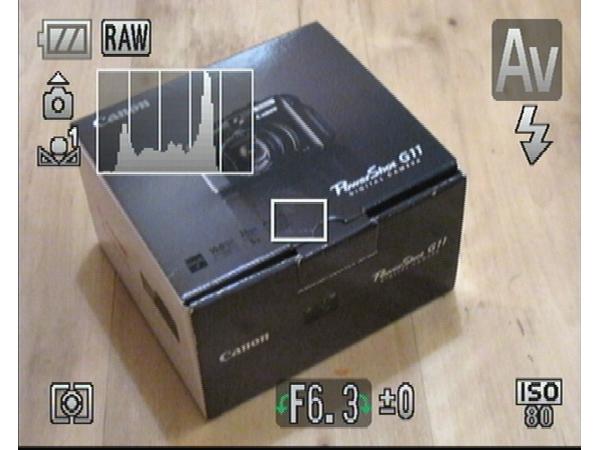
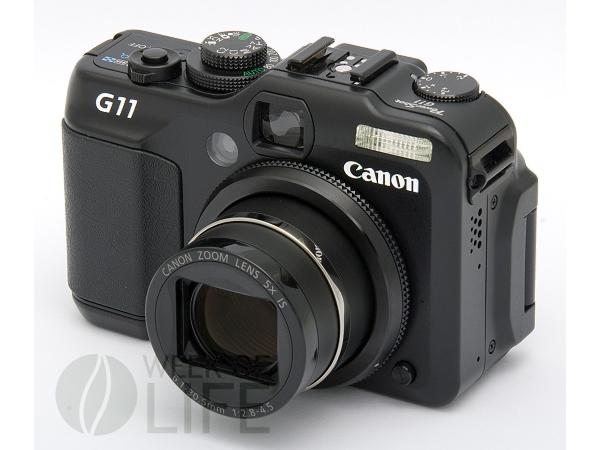
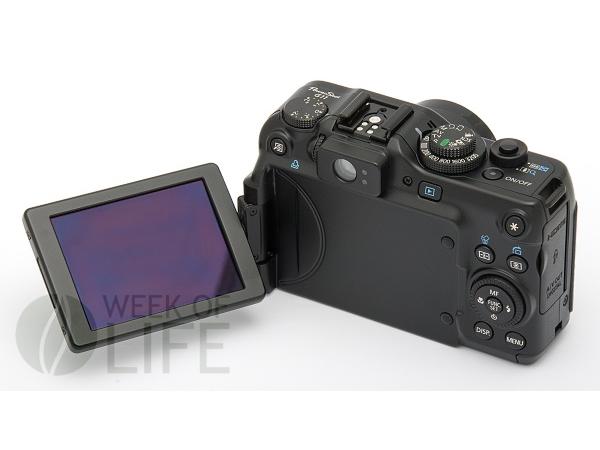
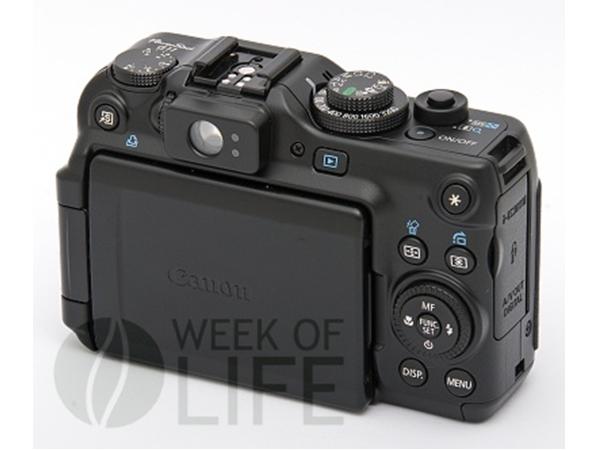
Canon PowerShot G11

Pokud alespoň zběžně sledujete vývoj digitální fotografické techniky, nemohlo vám uniknout, že jeden ze základních parametrů – rozlišení – neustále pomalu stoupá. Letos se však patrně vůbec poprvé v historii stal opak: Canon u své vlajkové lodi mezi kompakty, modelu PowerShot G11, použil snímač s menším rozlišením než u předchůdce G10.

Pojďme se nejprve krátce seznámit s „Géčky“ jako jednou z produktových řad kompaktních digitálů Canonu. PowerShoty G už od počátku svého vývoje, od modelu G1, uvedeném na trh již v roce 2000, představují ty nejvyspělejší fotoaparáty v kompaktním provedení jak v rámci vlastní značky, tak i mezi konkurencí. Géčka vždy vynikaly a vynikají skvělou obrazovou kvalitou, výborným technickým vybavením a také pokročilými funkcemi. Vzhledem k tomu nikdy nebyly levné, ale představovaly jakési záložní fotoaparáty pro polo- a profesionální fotografy, pracující obvykle s digitálními zrcadlovkami. Předposlední Géčko pak disponovalo úctyhodným rozlišením 14,7 Mpx. Nejnovější PowerShot G11 však má „jen“ 10 Mpx. Proč tato změna o tři generace nazpět (G10 měl 12 MPx, G8 nikdy neexistoval a až G7 měl 10 Mpx)?

Kompaktní digitální fotoaparáty mají jednu zásadní nevýhodu – mají velmi malé snímače (velikosti řádově v milimetrech na rozdíl od desítek milimetrů D-SLR nebo Micro 4/3) a tím i značně miniaturní jednotlivé buňky. Proto nedokážou vygenerovat silný náboj a naopak v nich snadno a rychle vzniká rušivý digitální šum. Zatímco tedy mnohá zrcadlovka má například při citlivosti ISO 800 obraz šumem téměř nepostižený, snímek z většiny digikompaktů je i přes vysoké rozlišení použitelný maximálně na malé fotografie, kde se postižení šumem ztratí. Jinak řečeno, zvyšující se rozlišení digitálních kompaktních fotoaparátů při zachování stejné velikosti snímače je de facto škodlivé.

Canon si to zcela jistě uvědomil a v případě G11 upozadil marketingový nátlak na vyšší rozlišení – ostatně i těch 10 Mpx je celá hromada dat – a naopak se věnoval zvýšení obrazové kvality. Jak se dozvíte v závěru této recenze a jak se také můžete přesvědčit na ukázkových fotografiích, povedlo se mu to více než dobře.

Canon PowerShot G11 – ve zkratce
Rozlišení 10 Mpx, stabilizace optiky
Optika 28–140 mm
Video VGA (640 × 480 px)

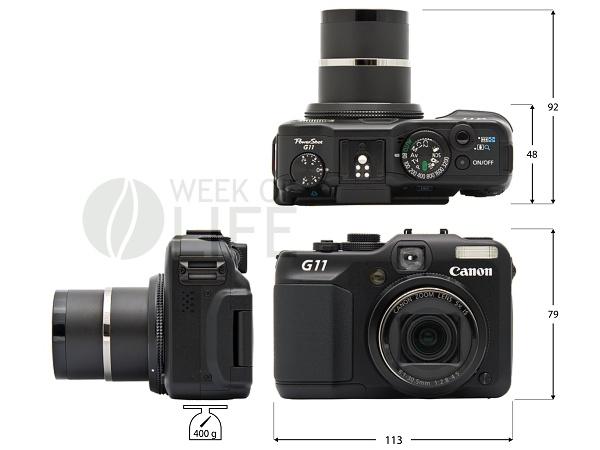
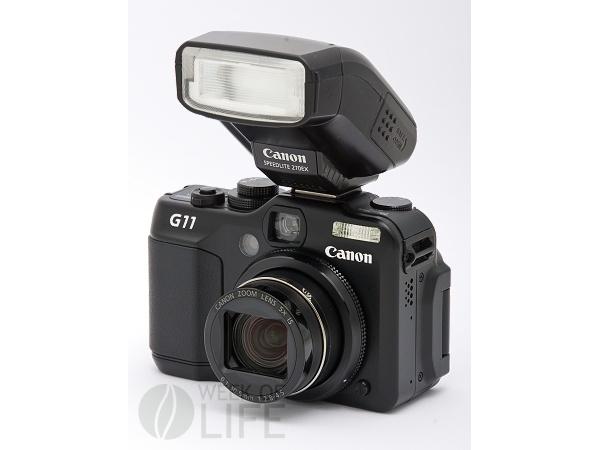
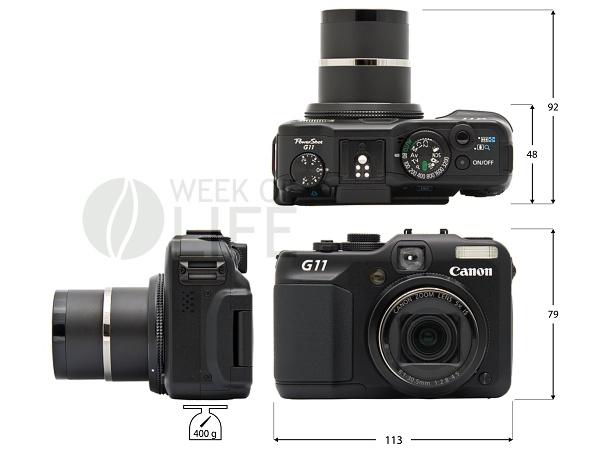
Canon G11 je velmi robustní kompakt, který se svými rozměry blíží spíše fotoaparátům Micro 4/3 standardu (viz např. Olympus Pen E-P1 nebo Panasonic Lumix DMC-GF1 v našich recenzích). Díky většímu tělu se ale přístroj zase dobře drží a množství tlačítek a dalších prvků rozmístěných na těle se dobře ovládá. Při hmotnosti 400 gramů budete výrobci vděčni i za klasický řemen na krk na rozdíl od obvyklého „kompaktového“ poutka na ruku.

Jde také o jeden z mála posledních digitálních kompaktů, které jsou ještě vybaveny optickým průhledovým hledáčkem. I když malým a ne zcela dobře použitelným.

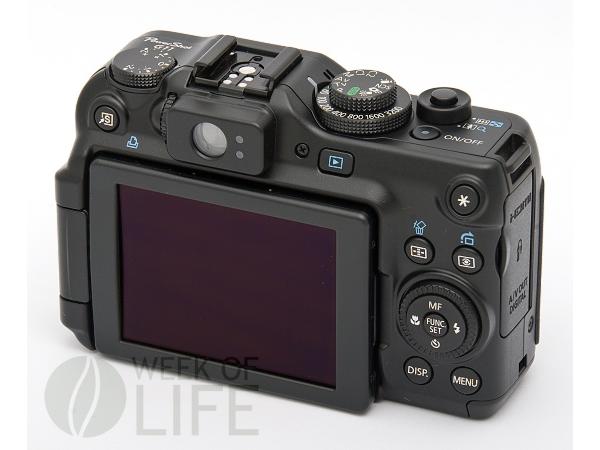
Kromě optického hledáčku je Canon G11 samozřejmě vybaven velkým zadním displejem – v tomto případě uloženým na kloubovém uchycení, umožňujícím nejen vyklápění o bezmála devadesát stupňů, ale také otáčení o tři čtvrtě kruhu, tedy 270 stupňů. Díky tomu můžete pohodlně fotit z nejrůznějších krkolomných poloh, ale třeba také displej otočit lícem dovnitř pro bezpečnější transport apod.
V případě LCD se Canon opět vrátil dokonce hned o několik generací Géček nazpět, jelikož posledním takto vybaveným modelem byl PowerShot G6, představený koncem roku 2004. Ten však měl malý dvoupalcový displej, kdežto G11 používá LCD s úhlopříčkou téměř o jeden palec větší se čtyřnásobně větším rozlišením.

Super vychytávky
Velké možnosti nastavení
Stabilizace obrazu
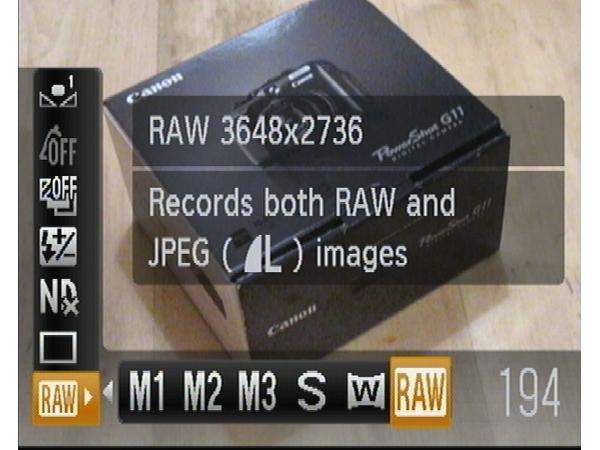
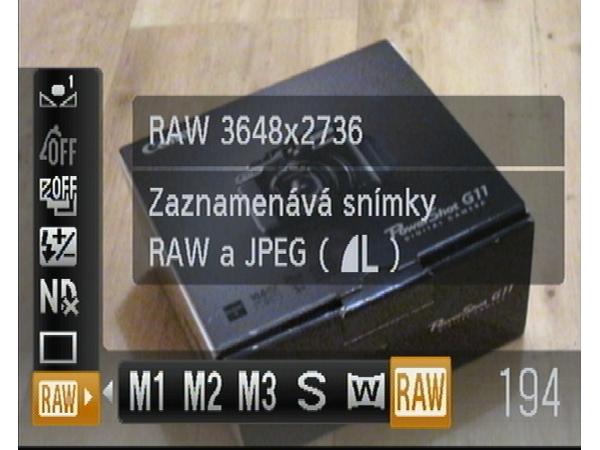
Obrazový formát RAW
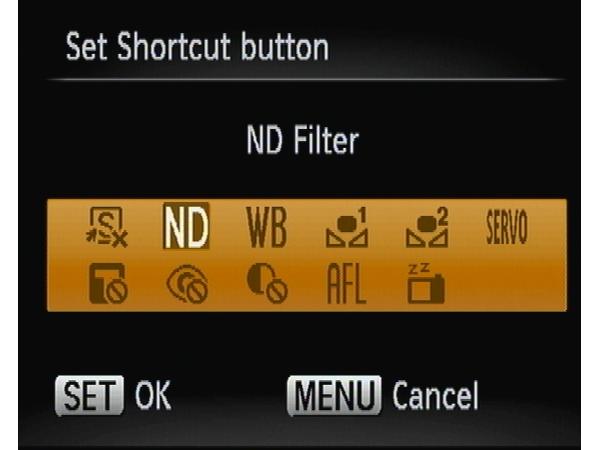
Vestavěný neutrálně šedý filtr
Modularita (možnost připojení příslušenství)

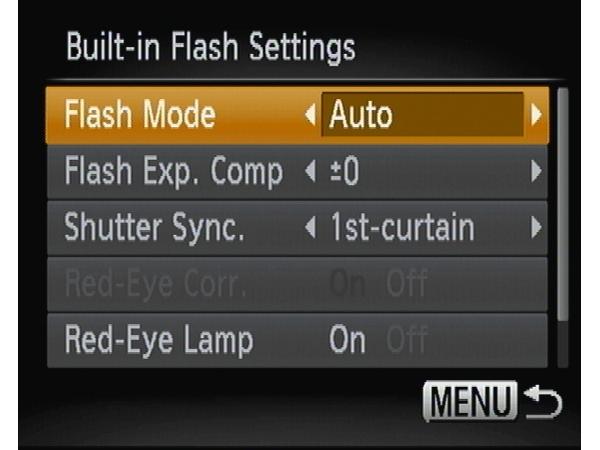
Canon PowerShot G11 disponuje velkým množstvím pokročilých funkcí a po vzoru zrcadlovek pro náročné fotografy je i ovládání navrženo tak, aby nejdůležitější parametry bylo možné změnit velmi rychle. K tomu slouží ovládací prvky přímého přístupu k funkcím, jež jsou rozesety doslova po celé horní a zadní stěně fotoaparátu.

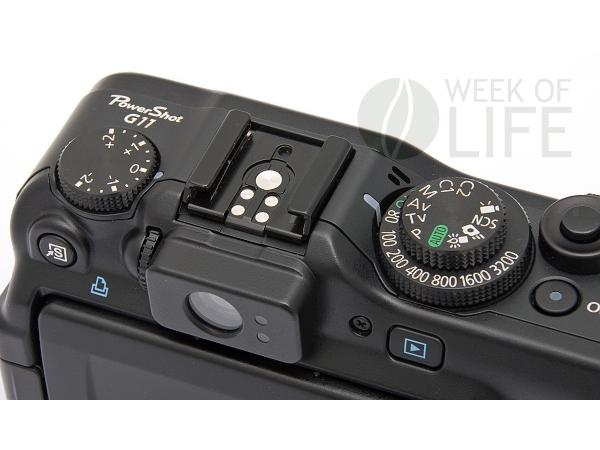
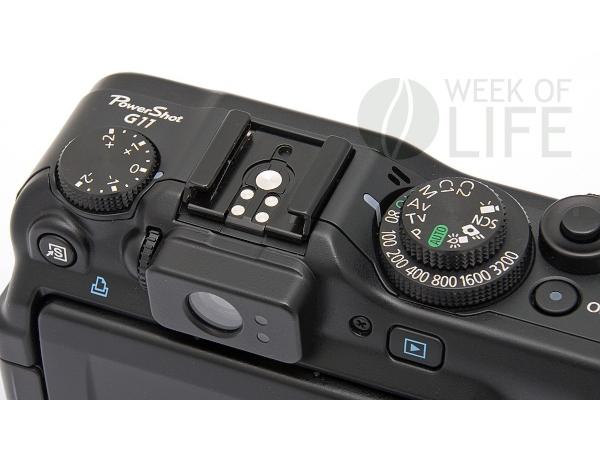
Všimněte si zejména „analogových“ kruhových ovladačů na horní stěně. Zcela vlevo najdete korekci expozice v rozsahu ±2 EV, členěnou po třetinách expozičního stupně. Vpravo vedle sáněk blesku se pak nalézá zdvojený kruhový volič, kdy větší spodní mezikruží ovládá citlivost ISO, menším horním kolečkem pak nastavujete expoziční programy. Zde naleznete také volby C1 a C2, což jsou dva tzv. Custom – Uživatelské režimy, pod které si můžete nadefinovat vlastní nastavení ve velmi široké škále funkcí, včetně například nastavení ohniska zoomu.
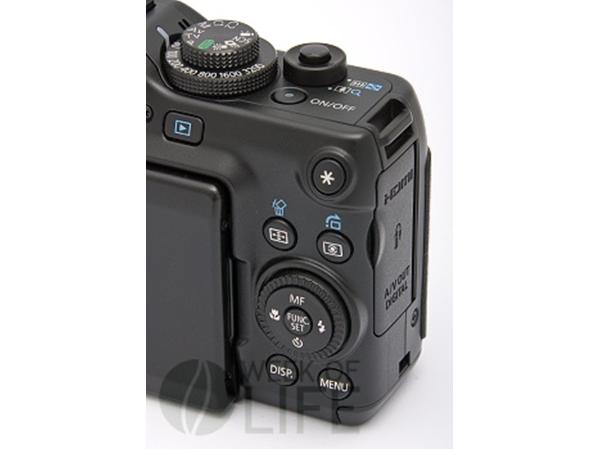
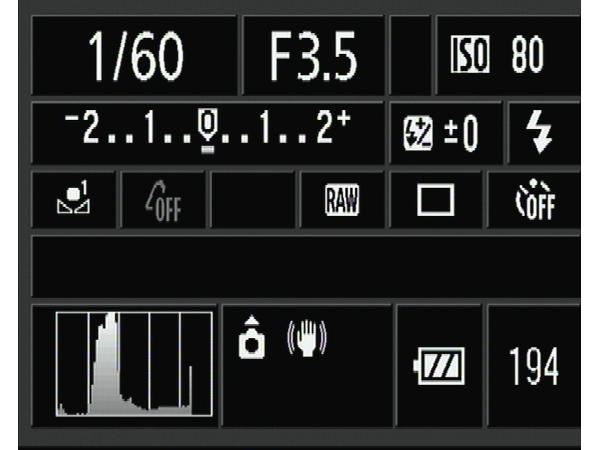
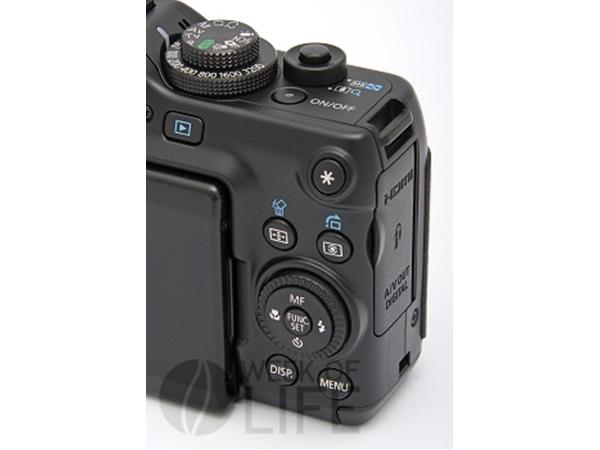
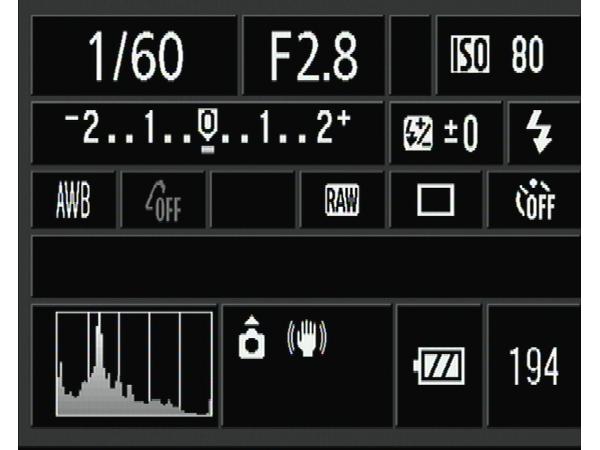
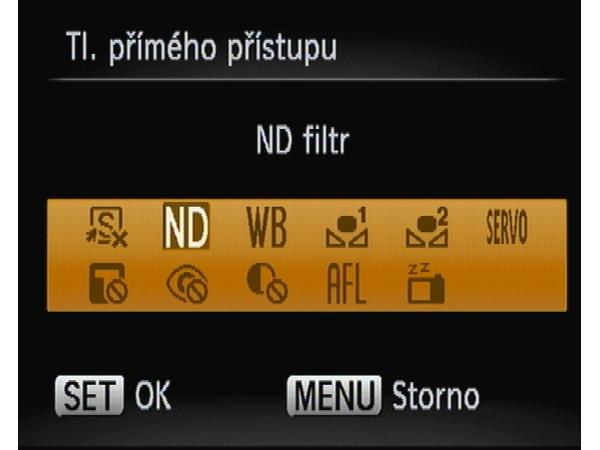
Na pravé zadní části fotoaparátu vedle displeje pak můžete spatřit obvyklou sestavu tlačítek a čtyřsměrného voliče s rotačním mezikružím. Zkrátka a dobře, ovládání Canonu G11 je velmi přímočaré a rychlé. K tomu navíc přispívá uživatelsky konfigurovatelné tlačítko na zadní stěně pod korekcí expozice. Množství funkcí, ze kterých lze vybírat a tlačítku určit, najdete níže na poslední ukázce menu fotoaparátu.

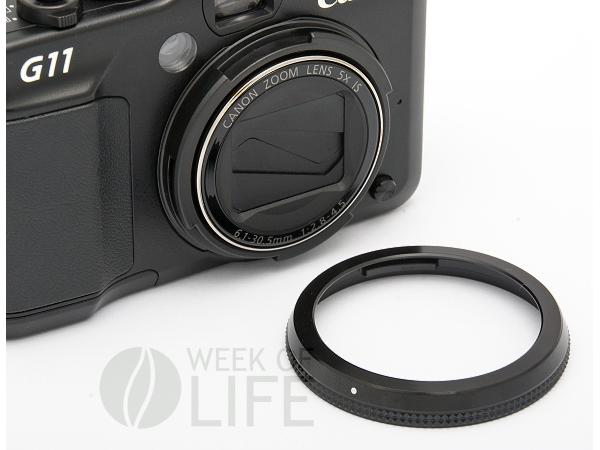
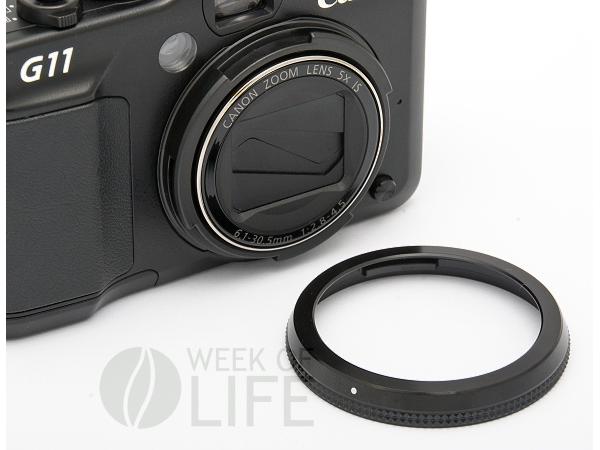
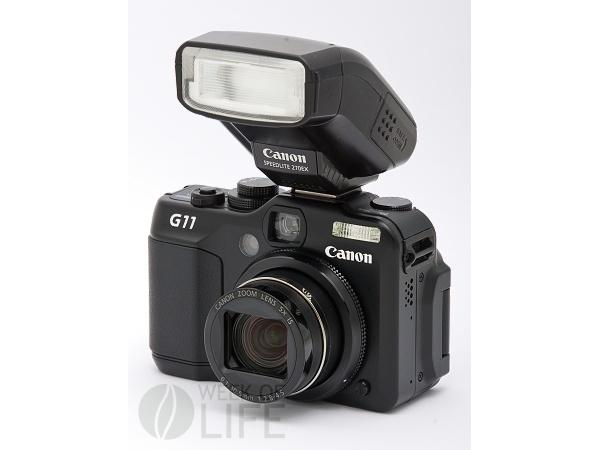
Stejně tak po vzoru vyspělejších digitálních zrcadlovek je Canonu G11 vnuknuta velká míra modularity – možnosti uživatelského rozšíření. Mezikruží kolem objektivu je odnímatelné a pod ním najdete bajonet, podobný uchycení objektivů zrcadlovek. Na něj se nasazuje volitelně dodávaný redukční tubus, na který lze nasadit rozličné fotografické filtry nebo třeba telekonvertor s mohutností 1,4×. Redukční tubus je také kompatibilní s kruhovými makroblesky Canonu, běžné externí blesky lze samozřejmě nasadit do sáněk na horní stěně aparátu. Zejména s malým bleskem Canon Speedlite 270EX je sestava stále dostatečně kompaktní, a přesto vyniká vysokým světelným výkonem i ve ztížených podmínkách.

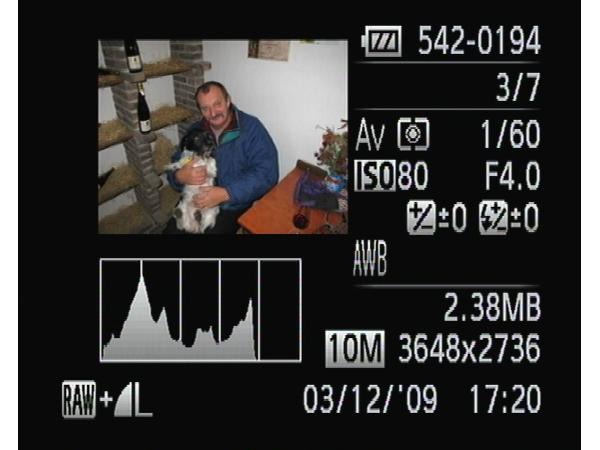
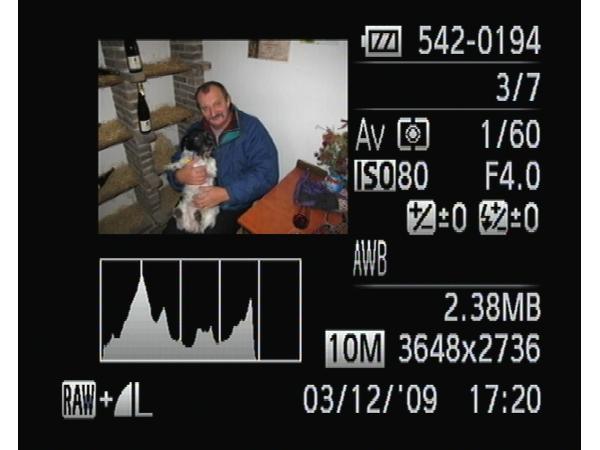
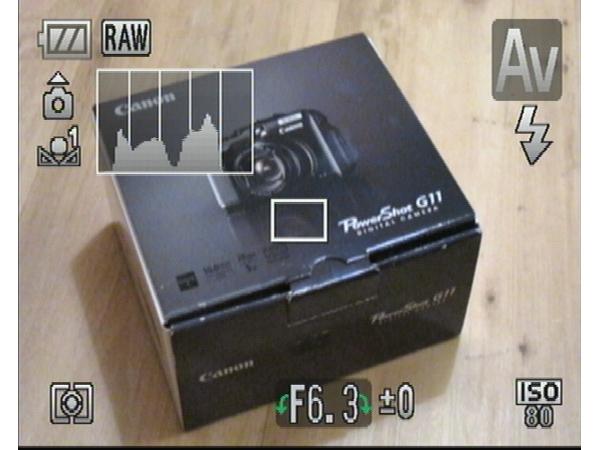
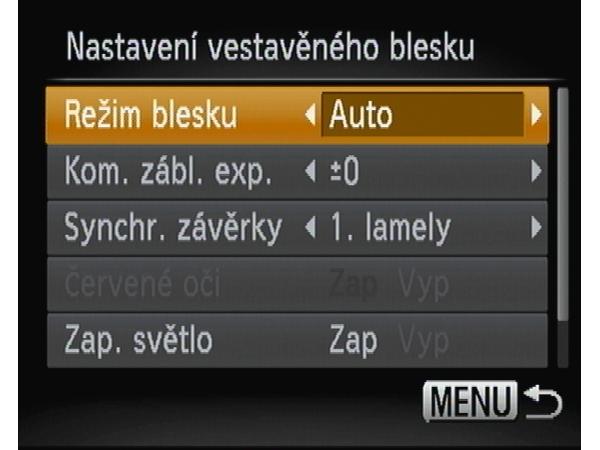
Ukázky menu fotoaparátu Canon PowerShot G11

Celkové hodnocení

Canon PowerShot G11 představuje bez přehánění nejlepší kompaktní digitální fotoaparát na trhu na sklonku roku 2009. Tím, že Canon zachoval rozumné rozlišení a zároveň tedy i velikost jednotlivých buněk snímače, plus vyvinul výborné odšumovací algoritmy, dostal kompaktní aparát, který co do míry šumu překoná veškerou konkurenci. S tím se pojí již tradičně vynikající objektiv, který podává velmi ostré snímky bez optických vad. Canon G11 je výborně vybaven funkcemi – na své si přijdou jak začátečníci používající automatiku, tak i polo- a profesionálové, jimž je vlastní spíše priorita clony, času nebo plný manuál. U takovéhoto stroje nesmí chybět ani bezztrátový formát RAW, který umožňuje dodatečně v počítači mnoho úprav, aniž by se tím poškodila kvalita obrazového souboru.

Základní technické údaje Canon PowerShot G11

Snímač

CCD 1/1,7″
10 Mpx (3 648 × 2 736 px)
Citlivost ISO 80 až 3 200

Optika

28–140 mm F2,8–4,5
Stabilizovaná optika

Paměťové médium

SD/SDHC

Datové formáty

Obraz: JPEG, RAW (CR2)
Video: MOV

Video

640 × 480 px, 30 fps
320 × 240 px, 30 fps
Zvuk mono

LCD

Úhlopříčka 2,8″ (71 mm)
461 000 px

Napájení

Li-Ion akumulátor

Rozměry a hmotnost

113 × 79 × 48 mm (š × v × h)
400 g (vč. akumulátoru a paměťové karty)

Chcete znát názor foto specialisty, případně shlédnout krátkou videoprezentaci fotoaparátu Canon PowerShot G11?

Remote places – Vietnam

Hoang Thao, Manager, Vietnam

Hoang Thao, a young lady living in Hanoi, the capital of Vietnam, gave the first interview from this part of the world, in which she openly expressed feelings that are held by the younger Vietnamese generation of today. She even openly answered questions regarding the current problems of her country. A country where people are closely tied by tradition and where the family stands at the forefront of life. Read the interview with this young lady who represents the young Vietnam generation.

How did you learn about the Week of Life project and what convinced you to take photos of your own week of life?

I often visit www.vladstudio.com, the page of illustrator Vlad Gerasimov, where he wrote that he really enjoyed Week of Life, so I had a look at the homepage, looked at a lot of amazing photos by the others and then wanted to contribute with some images of my life, my area to the Project. So I just went for it.

How would you describe the life in Vietnam? What do you appreciate the most about your country and on the other hand, what would you like to change?

In Vietnam, the lifestyle is different among different cities. My home city, which is the capital, surely has a busier lifestyle than all the smaller ones, but it is not as fast as the biggest city of our country, Ho Chi Minh City. Of course everywhere people have to work hard to earn a living but here they highly consider also the non-material value and they enjoy every moment of their life with other people.
The advantages of my country: People: quite peaceful, friendly, strong connection among the community, caring and generous. Nice landscape. Food: always cheap, fresh and new. It is also famous for Silk and Coffee.
The disadvantages: too many protocols if there’s a problem related to documents. Traffic is bad in the two biggest cities. People are poor. Sometimes customers do not have any power. We need a more active attitude. We need to improve education and books.

We can see from your photos that the members of your family are often together and that you respect traditions. Do you think that people in Vietnam follow national habits more than people, for example, in European countries? And what is the attitude of young people towards respecting traditions?

I think that Vietnamese people, just as European people, have their own special days. Perhaps they are not the same: for example you have Christmas, we have Lunar New Year. However I must say that people here in Vietnam really highly appreciate the value of the family. Normally no one leaves their home to live alone until they get married and family members are always very close to each other. Young people are less meddled by their parents, nevertheless, they still obey their parents a lot. It does not mean they don’t have their own point, but it means they respect and always want to please their parents.

The things you say are very interesting. In Europe and I think in America too, the situation is different. Perhaps that‘s the reason why there are more and more singles who live alone, because today everyone wants to be independent soon. What about you? Do you live alone or with your parents? Do you have brothers and sisters? May I ask you how old you are?

I am 23 and I am not married so I still live with my family. I have a younger sister who is 8 years old (small, right?). Actually I have my job and if I wanted I could move out. But it’s also a problem of finances. It’s more economical when you don’t have to rent a house and the meal (made by mom) is ready every evening after work. I kind of love living with them 🙂 People here are closely attached to their family. For example, if a woman has 2 sons, one of them has to live with the parents to take care of them even if he’s married. Normally that’s the 2nd son :). Next year I’ll go to England for my Master course (Art Management) so of course at that time I won’t live with my family.

You say that you learned about the project from Vlad Gerasimov´s website, Vladstudio. Does it mean that you are interested in visual and graphic arts and design?

I’m interested in interesting things, especially arts. I worked for an art foundation, projects and websites. My hobby is following art events, see what’s happening today… 🙂

What must people in your country do or be to have a good life in Vietnam and not be poor?

To be honest, while a part of the Vietnamese people study a lot, work harder and harder everyday to get high salary and better living standard, others are fond of making big money in short time periods in ridiculous ways that you can not imagine. Mostly they are not criminals but they are fond of things like „lottery and gambling“, which are highly illegal. There are no adequate words for them in English so I’m sorry I cannot explain more 🙂

What would you say about freedom of speech in your country? Is it easy to access information from abroad, for example through the internet, or is there any blockage of sites that are “unsuitable”?

We have freedom, however we never mention sensitive problems such as politics. We cannot access many sites from abroad like Talawas, and even Facebook 🙂 However people always find a way to connect. The government hasn’t released any strict rules concerning these issues.

Buddhism is the most practiced religion in your country. What does it mean exactly for a modern person? Do you feel any difference between the attitude of young and older generations to this faith?

The Vietnamese people have a habit of going to pagodas, especially on Full moon or Lunar New Year. Many of them are Buddhist, however if someone goes to the pagoda it does not mean that he is Buddhist, it’s just something we love to do. Buddhists normally concentrate in certain areas, and they are mostly seniors who have free time. I myself do not like and care about religion, however I love going to the pagodas and wish for better things to happen. Thailand is much more into Buddhism than Vietnam. Both young and old people always respect the faith and the monks, whether they are Buddhist or not. One of the reasons is that Vietnamese people believe monks and Buddhism in general is very pure and believable. Another reason is that during the war, pagodas and monks helped many families hide and live there, they protected them, taught them to write and to speak.

Weeks of Hoang Thao

Místa vzdálená – Vietnam

Hoang Thao, mladá dívka žijící v Hanoi, hlavním městě Vietnamu, nám poskytla první rozhovor z této části světa, ve kterém se otevřeně vyznala z pocitů, které v sobě nosí mladší generace dnešních Vietnamců. Otevřeně odpověděla i na otázky týkající se současných problémů své země. Země, ve které jsou lidé spjati tradicemi a kde stojí rodina na absolutně prvním místě. Pojďte si přečíst rozhovor s dívkou, která zastupuje mladou vietnamskou generaci.

Jak jste se o projektu Week of Life dozvěděla a co vás přimělo přispět vlastním týdnem života?

Často navštěvuji stránky ilustrátora Vlada Gerasimova na www.vladstudio.com, kde psal, že si Week of Life užíval, a tak jsem se podívala na hlavní stránku projektu, prohlédla si hromadu úžasných fotografií a také chtěla přispět fotografiemi svého vlastního života a oblasti, ve které žiji. A tak jsem to udělala.

Jak byste popsala život ve Vietnamu? Čeho si na své zemi nejvíce vážíte a naopak najdete něco, co byste ráda změnila?

Život ve Vietnamu je v každém městě jiný. V mém rodném městě, které je zároveň hlavním městem, je životní styl mnohem rušnější než v těch menších, ale ne tak rychlý, jako v Ho chi minh, což je naše největší město. Samozřejmě, že všude musí lidé těžce pracovat, aby si vydělali na živobytí, ale u nás vysoce zvažujeme i nemateriální hodnotu a užíváme si každé chvíle, kterou můžeme strávit s ostatními.
Výhoda mé země: Lidé: poměrně mírumilovní, přátelští, úzce spjatí s komunitou, dobrosrdeční a štědří. Je tu pěkná krajina. Jídlo: vždy levné a čerstvé. Jsme také známí díky hedvábí a kávě.
Nevýhoda: příliš protokolování, pokud se vyskytne problém spjatý s dokumenty. Doprava ve dvou největších městech je špatná. Lidé jsou chudí. Zákazník občas nemá jak se bránit. Potřebujeme zaujmout aktivnější postoj. Je také zapotřebí zlepšit vzdělání a knihy.

Z vašich fotografií je patrné, že se jako rodina často scházíte a ctíte tradice. Myslíte si, že se ve Vietnamu dodržují zvyky více než třeba v evropských zemích? A jak se k dodržování tradic staví mladí lidé?

Myslím si, že jak u nás, tak i v Evropě existují určité významné dny. Možná nejsou stejné: vy máte například Vánoce, my zase Lunární nový rok. Nicméně musím připustit, že si velice vážíme rodinných hodnot. Nikdo většinou neodchází z domova dříve než po svatbě, jednotliví členové rodiny jsou si velice blízcí. Rodiče se tolik nemíchají do života svých dětí, které je ale i tak velice poslouchají. Neznamená to, že by mladí neměli svůj vlastní názor, ale své rodiče respektují a vždy se jim snaží vyhovět.

To, co píšete, je velice zajímavé. V Evropě a myslím, že i v Americe, je tomu naopak. Možná proto přibývají svobodní jedinci, co žijí sami, všichni se chtějí totiž brzy osamostatnit. Jak je to s vámi, žijete sama, s rodiči, máte sourozence a kolik je vám let, pokud se mohu zeptat?

Je mi 23 let, nejsem vdaná, takže ještě bydlím u rodičů. Mám mladší sestru, které je 8 (mlaďounká, že?). Mám svoji práci a kdybych chtěla, tak se můžu přestěhovat, ale vždy je to otázka financí, je výhodnější, když nemusíte platit nájem a máte každý večer po práci připravené jídlo (od mamky). Prostě s nimi ráda bydlím 🙂 Lidé jsou zde s rodinou více spjati. Když má například žena dva syny, jeden z nich s nimi musí bydlet, aby se o ně mohl starat a to i v případě, že je ženatý. Většinou je to ten druhorozený 🙂 Příští rok pojedu do Anglie kvůli svému magisterskému studiu (obor umělecký management), takže pochopitelně během té doby se svojí rodinou nebudu.

Psala jste, že jste se o projektu dozvěděla prostřednictvím webu Vlad studio. To znamená, že máte ráda výtvarné umění, design, grafiku. Je to tak?

Zajímám se o zajímavé věci, především o umění, pracovala jsem pro uměleckou nadaci, projekty a webovou stránku, takže mým koníčkem je sledování uměleckých událostí, vědět, co se zrovna děje…:)

Co musí člověk dělat a nebo čím by měl být, aby se měl ve Vietnamu dobře a nebyl chudý?

Abych byla upřímná, část obyvatelstva hodně studuje, každý den dře, aby měla vyšší plat a lepší životní standard, ti ostatní rádi vydělávají velké peníze v krátkém časovém období tak směšným způsobem, že si to ani nedovedete představit. Nejsou to zločinci, ale rádi dělají takové věci, jako „sázení a hazard“, které jsou však velmi nelegální a v angličtině pro ně neexistují ta správná slova, takže se omlouvám, že to nemohu blíže vysvětlit.

Jak je to ve Vietnamu se svobodou slova? Je jednoduché dostat se k zahraničním informacím například prostřednictvím internetu nebo existuje blokace stránek, které nejsou „vyhovující“?

Svobodu máme, ale nikdy se nezmiňujeme o citlivém problému jako je politika. Na mnoho zahraničních stránek jako Talawas či dokonce Facebook 🙂 přístup nemáme, lidé si však vždy najdou způsob, jak se připojit. Vláda žádná striktní pravidla týkající se tohoto problému nevydala.

Nejrozšířenějším náboženstvím je ve vaší zemi buddhismus. Co přesně to obnáší pro moderního člověka? Cítíte rozdíl mezi postojem mladé a starší generace k tomuto náboženskému směru?

Ve Vietnamu je zvykem chodit do pagod, především během úplňku a Lunárního nového roku. Mnoho pagod je buddhistických, což však neznamená, že ten, kdo do nich chodí, je buddhista. Je to prostě něco, co děláme rádi. Buddhisté se většinou soustřeďují v určité oblasti a jedná se především o starší lidi, kteří mají více volného času. Já sama nemám ráda a nezajímám se o náboženství, na druhou stranu však miluji chození do pagod a věřím, že se bude dít to dobré. Thajsko je v porovnání s Vietnamem více buddhisticky založené. Jak mladí tak i staří lidé mají vždy úctu k náboženství a mnichům, ať už jsou či nejsou buddhisté. Vietnamci považují mnichy a buddhismus jako takový za něco velice čistého a uvěřitelného a navíc během války mniši pomáhali rodinám ukrývat se v pagodách a žít tam, ochraňovali je, učili je jak správně psát a mluvit.

týdny uživatele Hoang Thao

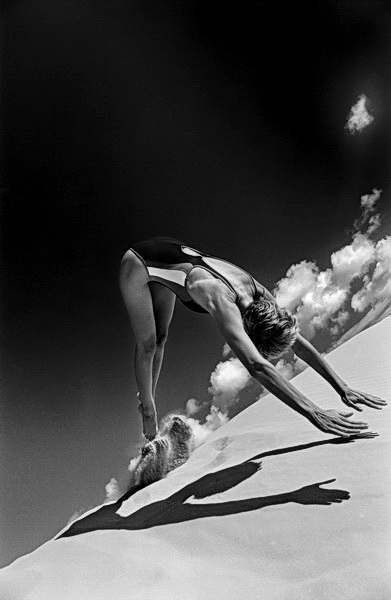
Swimming in the sand

I have long been convinced that camera and a good eye are not the only things that make for good photography. The best images need a little more. They need an unrepeatable moment, courage, and sense of light. Yet at the same time, it is sometimes good to avoid all thoughts about equipment, setting up, or staging the model in any way. One must simply press the release button at the right time at the right place. I am happy that I have taken several such photographs in my life. The one I would like to introduce to you today definitely belongs among them.

Swimming in the sand

It is in no way a new photograph in my archive. I created it on an island in the Atlantic Ocean that I often use as a natural studio for my fashion and art photography. In the same place, for instance, I created the black and white photograph of the half-naked lady who used my sweater as avant-garde pants and performed sumo rituals while standing on one leg. I will introduce this photograph here soon. But now back to the point. I’m simply very fond of this island and perhaps it rewarded me for it. I spent that whole week working on a catalog for the fashion label Fisher Collection and I can say that on the last day I’d had enough. I struggled with high fever, and whereas others walked around almost naked, I was running around with a camera dressed in a sweater and hood. Due to the unexpected illness it was a true photographic hell for me, and even today my memories are still quite mixed. But that does not change anything about the fact that the catalog, which I created there, belongs among the best I’ve created in fashion photography to this day.

I remember the moment quite clearly because swimsuits were photographed last and involved the most difficulties. I had an idea that we would do the last roll of film (yes, you read right FILM) on a huge sand dune and the model would be jumping down to make it seem as though her legs were at least twice as long as her torso. I used a 24 mm focal length lens for this effect. I used it for the whole roll of film and hoped that I had it. When I started to descend the top of the dune on the hot sand down to the car, I noticed that I still had one photograph left in the camera. Or more precisely, the control signaling the end of the film was not on, even though I had exposed 36. Sometimes it happens that the film is longer and there is space for one more photograph. I shouted to the top of the dune to the model, who was about to climb down that she should wait for me; I was coming back for one more photograph. I had no idea at the time that I was returning for one of my best photographs. When I was about two meters away from her, I said, „Hey, Marťa, it’s the last photo, so just jump into the sand as if you were jumping into water.“ I exaggerated a bit but what happened was exactly what I had in mind. The atmosphere, dynamics, and light were perhaps a reward for me coming back. Since then I’ve always exposed rolls of film until the very last shot and it has paid off many times. This was the field labeled 37e.

I had a hard time once again even in Prague though. The original negative of this image was being scanned in the graphic studio for so long as no one knew about it. It took exactly half a year, even though they searched for it several times in the same studio, in the same places, always with the answer that someone must have taken it. I refused to accept that it would not be found. You can imagine how I felt when six months later I went to pick up the lost child filled with fear that it might be a silly joke.

Adolf Zika

Modest Daniel Kaifer

Daniel Kaifer, Photographer, Czech Republic

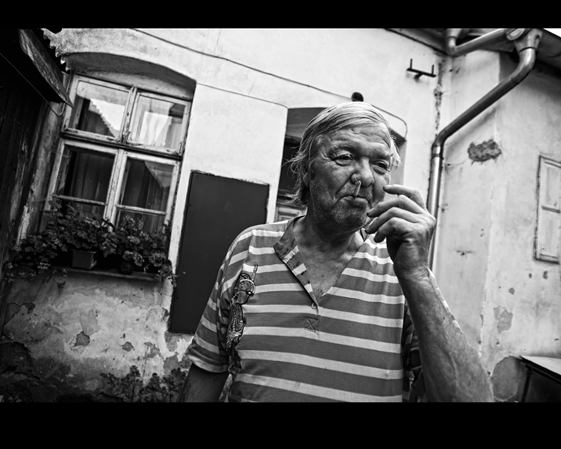
Daniel Kaifer’s life is closely tied into the small town Horská Kvilda, where he has lived with his family for seven years now. His photographs pay tribute to this place and its inhabitants and depict an atmosphere you could not find in any larger town. Come read an interview with a man who humbly claims that he‘s just a kind of sleepy bear that withdrew into the mountains.

When did you first get acquainted with the medium called photography? And how has your relationship with photography developed? Are you an amateur or a semiprofessional?

I became acquainted with photography at university, as a hobby. I hitchhiked through Europe and wanted to have a way to keep my memories. And so I bought my first camera at Mr. Škoda in Prague. It was an old PENTAX program A with a 35-105 mm lens. This configuration made it rather a brick, not very suitable for traveling but reliable. I later enlarged all the images to 24×36 mm prints, glued them to cardboard and hung them on the wall in my room on campus. It had nothing to do with quality and real photography. Of course later my relationship with photography developed further and changed but the prehistory of my relationship with photography began in this way.
Whether I’m a professional? Ummm, Yes, I am. I see the difference between an amateur and a professional in that a professional is always and under any circumstances able to create a valuable image crafted with care, which has a high quality technically and also contains something extra – a message, which you then carry yourself as the author to the viewer. You are able to speak to the viewers and easily pass on your testimony to them. An amateur sometimes succeeds in this and sometimes not. Although the craft is mastered (perhaps thanks to new technology), the important aspect is missing – the testimony. I see the fundamental difference here. It’s secondary whether you get paid for photography or whether you do it due to some internal overpressure and a need to express yourself.
An experienced cliché is that a professional is someone who has a well-known name and earns money with photography, perhaps even a lot of money. An amateur does it for his own pleasure and is not very good at it. I believe that this is indeed a cliché. It’s only marketing and the ability to sell photography as such. In my view, the so-called professionals and amateurs often overlap. In both directions.
I can perhaps back up my claim that I’m a professional with the fact that this year I obtained a QEP certificate, which is being awarded by the Federation of European Professional Photographers. But is it important? Why do these two pigeon-holes exist? Isn’t this question only about one’s own ego?

What does photography give you personally, what meaning do you find in it?

Photography is an amazing adventure. In photography, I primarily look for the wonderful moment of a story being born, of the most common story, which is everywhere around us. This moment cannot be thought up in advance, this fleeting instant cannot be planned, you cannot force it out, you can only and only get them from life. It’s a gift. It’s a journey of searching through life and finding, discovering. It’s not possible to create the scene like in the theater, I’m not a director. I’m merely a spectator drawn into the story. When photographing a documentary I encounter many people and stories. In order for photography to convey testimonies, it must be natural without calculation, without manipulating with the “actors” on the stage. In my opinion, such stories can be photographed only with great honesty and humility towards the people I try to capture. This all is not possible without me getting to know everyone, every photographed person. And some images take up to five years to be created. While I photograph, nice relationships, sometimes friendships, are formed. The photograph is in these cases only a sort of a cherry on top, a bonus, a dessert, in which everything joins into one. In such moments, the photograph is not even important, everything else is secondary and it lives its own life, on which I have little influence any more. And I have an opportunity to pass all of this over to the viewer as the author, well isn’t it beautiful to be in the world for this?
The second thing is the opportunity for the freest outlook on life. There is no force, which can prevent you looking at this world freely. Books can be burned, mouths can be shut. But it is always possible to see this world freely. Even without a camera. The camera is only a tool, an instrument, an intermediary. Of course, we can be affected by the time, environment, in which we live, the people, with whom we live, but no one can ever take this freedom away from you.

What is your job, what are your hobbies and where do you live with your family?

That’s probably not very interesting…, originally my profession was a construction engineer (heating, boiler rooms, gas lines, power engineering and so forth). At the moment it’s kind of half and half, sometimes more photography, sometimes more engineering. For seven years now, I’ve lived with my family in the middle of the national park in Šumava in Horská Kvilda, beautiful nature, a healthy environment for children, peace, a lot of snow, temperatures of up to -42 °C. The price for it is that one must make money for bare survival in several ways, not only with photography, not only with engineering. The hobbies are obvious – cross-country skiing and mountains, poetry, music…, but that probably isn’t interesting.

Do you think that it is possible to earn a living with the sale of documentary photographs in this country at this time?

I cannot answer this question. If I speak for myself, I must say that it’s not possible. For a long time I have tried to find a way to earn a living with documentary photography in a place that has 50 permanent inhabitants. To tell the truth, I have not accomplished that and am not able to do that. I ascribe this to two factors. First, I am not a businessman. Someone who would stand in front of the buyer and sell his goods as the most perfect thing in the world. I would more likely draw the buyer’s attention to the faults I see in my work. This may be sincere but it’s not a business policy. I consider this my own failure because a professional photographer should be good at the business part of the craft as well. It’s true that photographs should be sold by galleries and gallerists but this photography market unfortunately does not work here. All the same, this sentence is not an excuse, it’s a mere grumbling about myself.
The second factor is that today, the common spectator is overwhelmed with the slush of the postmodern time and technical possibilities he cannot fully make use of. Photography becomes only a bare message, information, decoration. The testimony disappears. There is no time to search, it’s necessary to sell and subordinate the photograph – that is, the message – to this goal. I cannot judge whether this is good or bad but the art of reading photography is definitely disappearing. What actually is a good photograph today? Meaningless colored enlargements or small pieces of paper hidden somewhere in a drawer? Who today still reads poetry? Who today is still able to read photography? Why buy a documentary photograph for hundreds of Euros? And even hang in at home as a decoration?
And so I have come to the attitude where I believe that if my work is good and of high quality, it will find its way to the viewer alone and even sell itself. And if isn’t good? It has no right for any further life and my effort is only another vanity in this world. But I enjoy it. And if my photographs are sold? Is that an important question??

Where did you first come across the project Week of Life and how did you feel about it?

I learned about the Week of Life project from Mr. Jiří Heller. Take nine photographs in a day seven times in a row. It was on a Monday evening, I was moving and completely remodeling my study and in addition, I had to submit some work. Nine photographs a day? Whole week? At first I didn’t want to go ahead with it at all, I had no time, I had better things to do. There are days when stories just pour into your life, one after another, and then comes a day, which you spend laying in bed and all you encounter during the day are the boards on the ceiling. And we are back to the first question, who is a professional and who is an amateur. A professional must be able to photograph even the ceiling boards. Nine quality photographs a day with a story about where I live, whom I meet, what is its story? That’s a challenge though! And why not right now, when else… Week of Life was a challenge for me, a challenge in a field of photography, which is very close and dear to me. I hope that I have not let the viewers down and I hope that I have communicated my story to at least one of them.

Do you think that this type of project could in any way help society or be in any way useful to an individual?

I’ve been going through old photographs of Šumava and the most ordinary and sometimes even poor quality photographs of people, places, gain incredible immense value after the decades. It’s a view into one’s own past, on which I can reflect as a spectator. I can discover that I’m free. I can treat it in a way I deem the best. The one who knows one’s past, one’s story, has a chance to learn about oneself. I think that Week of Life is an enormous message to the future. This is who we are and this is how we live. This is more important that the ego of each individual author, more important than the technical aspect of the matter. The ability to learn about yourself is the project’s contribution. I would wish the project not to slip into another ‘web photo gallery’ and maintain its high standard. That’s a very difficult and tough task in today’s world!

Yes, you are right, the internet is full of slush and it is not easy to maintain quality, especially in the battle for advertisers. What is your view of the internet in general and in relation to photography? And in which direction do you think will it develop?

In the face of all negatives, which are being written about the internet today and despite all dangers, which it holds, I have to answer that the internet is a living organism, which can connect individuals on this Earth. It’s similar as with fire, a good servant but a bad master. I like fire, I like its warmth, but I fear its power, which I’m unable to comprehend and fully control. It is similar with the internet. It is amazing that the internet enables me to share the stories of other people and not only that. I can communicate with them, I can live their life with them at a distance and it extends my freedom. Freedom that ends beyond the border of my physical existence. I can continue to learn new things. On the other hand I see a danger in alienation from one’s own surroundings, one’s significant others. I am a little schizophrenic from the two worlds – the physical and virtual. I have no idea how the internet will develop further, but I think that we are in a developmental stage comparable to puberty or, using technical terminology, at the level of the steam engine. There are amazing things ahead of us – machines that fly and land on the moon – to wit, things we can’t even imagine today.

It’s similar in terms of photography. On the one hand, I heard recently that František Drtikol does not have a website and is not on facebook and thus it’s as if he didn’t exist. Martin Luther also doesn’t have a website and yet his legacy will live inside me until the end of my days. Then there are internet projects such as lens.blogs.nytimes.com of the New York Times, which fascinate me and which affect my life every day. And I believe that thanks to digitalization, the journey of photography was given immense and unsuspected possibilities but … The journey of photography has not become easier, rather the contrary. It is more difficult, photography as such is subject to new questions, new challenges. We must firstly accept that digitalization is a fact and secondly realize what do we really want to convey? Whom do we want to convey it to? How much do we want to convey it? How far can we go? Have we tried all possible means? Where are the limits of these questions? And what are the off-limits where one should not or must not go? You are also right in your question that the battle for advertisers is getting more and more difficult. Which advertiser is able to recognize a photograph of truly high quality in the infinite number that there is? Is good photography yours, or perhaps mine? What if we are both mistaken? And if we look around, the situation in our Czech playground is very sad, isn’t it? And we’re only talking about commercial sales of photographs. I have to repeat – the journey of photography has not become easier – it is becoming increasingly difficult with an inverse proportion. We face so many challenges. And technology keeps on getting ahead of us. I think it will all end up that in the future, recording reality will change to such an extent under the influence of technology that photography will be free, not marginal but free – only one of the ways to convey testimony. For instance, holographic 3D records of reality will exist, which will include aroma and emotional tracks and which will be captured with devices of the size of current compact cameras… and will be distributed on a mass scale. Or a small MATRIX will come. But it will not kill photography, on the contrary, it will become freer. I am looking forward to this time because I will be freer, technology will untie my hands, technology will enable to pass my testimony to as many people possible. It is technology that kills the slush we flounder through today. I have hope for this. But photography can be liberated only by photographers and their stories.

The last question – where do you see your future as a photographer? How will your path develop or how would you like your path to develop?

I would like to complete my two semi-finished projects – portraits of old women and a poetic documentary about people from Šumava. For two years I have been publishing a poetic irregular Friday piece Hlas Divočiny (Voice of the Wild). I choose the best photograph of the whole week, I write a text for it, which was going through my head while I was taking it and each Friday I send the whole thing to my readers. It’s sort of a gift, which I’d received, so why not send it forward as a gift. I would like to continue doing this for a few years.
I don’t think that my photographic career will change in any fundamental way. Perhaps I will be discovered and will exhibit in the whole Western hemisphere. Frankly speaking, there are many photographers like me and I certainly don’t belong among the best. I am just a kind of a sleepy bear that withdrew into the mountains. I wander through the country among people. However, it would be insincere to say that it does not please me when someone likes my work, when it appeals to someone, makes them think. It would be insincere to say that I don’t have to come down from the mountains to gather new strength in the valley.
How would I like for everything to develop? I would like to undertake a journey through Spain, three to four weeks, to meet new people, new stories and try to pass it on through photography. It would be nice if my photographs were sold more, for me to be able to maintain a professional standard of equipment and not have to finance it from the family budget. It would be nice. But who wouldn’t want this, right?
Just to walk through the land, step by step, not hurry anywhere, have everything I want, all mountains, trees and my own sins. Then I would be very happy and wealthy man.

Weeks of Daniel Kaifer

Two truths

The photograph I would like to tell you about today seemed not nearly as ambitious when it was born as it does today! It captures two elderly ladies in wheelchairs that are united certainly by more than just dark colored nurses. For instance, they are tied together by a passion for fashion trends–at least that’s how I see it.

Dvě pravdy

The image was created in 1996 on Fashion Avenue in New York, at about two o’clock in the afternoon. It was not made with any higher intention or even arranged ahead of time. As quickly as it came, it also left. I even remember than I only turned around to take it and exposed only three fields. It was not worth taking more because it created itself. Almost two years after I took it, nothing happened with it and in fact, it had had a sort of photographic vacation. It lied filed in my archive and waited for someone to remember it. In 1998 I enlarged it for the first time and showed it to a few people. And its story started right here. Opinions of it were so contradictory and differed in so many aspects that I became more and more interested.

A few years ago, when I started preparing my first photographic publication for exhibitions, I deliberately included it in my selection. My ‘advisors’ laughed, frowned, fell silent, but, most importantly, discussed. The turning point arose when my good photographic friend Honza Šibík came to my studio. A photographer of significant events, turmoil, and wars, whom I respect not only for his work but also for his modesty and goodness as such, his opinion on this photograph was unusually critical. He saw even cruelty and indiscretion to the situation on my part, and from the very beginning he perceived it as an inhumane photograph. This view was very interesting for me and I concerned myself with the photograph all the more. When we later met in New York and talked about my Portfolio, he did not forget to point out that he still maintains his view. Simply a second-rate photograph that does not belong to an exhibition of my photographs that he says he likes so much. I did not take Honza’s opinion as a reproach or criticism. I tried to learn from it and move on. I mean it in the sense that it is very important to observe who reacts and how to your photographs. To understand differences in people’s feelings in this way.

A few days before this article was published in print medium I visited my friend and teacher who is fifty years my senior, Mr. Jaroslav Krejčí, a renowned graphic artist and theater photographer, a man who taught at FAMU for twenty years and through whose hands have passed such students as Tono Stano. Mr. Krejčí was very tired that day, and so we sat in his apartment in Prague’s Small Side, drank coffee, and I listened to all possible useful things. I could not wait to hear an opinion on my new publication that he’d had in his hands for several days already and had not yet expressed an opinion. But it was not forthcoming and I was a little uneasy. Could it be that it was the one photograph that opinions would be much alike? About two hours later we finished talking and I was saying good bye. My teacher showed me to the door and on my way down the stairs I could not bear the fact that he had not said a single word about my publication. At the door we said goodbye and as his last sentence, he said. „I would throw out a third of the photographs from the catalog.“ I did not breathe a word and perhaps my heart skipped a beat or two. „The rest is very good. But you really surprised me with one.“ A moment of silence followed. „The granddames are powerful, that’s the best photo!“ I don’t think I added anything to this. I thanked him and was off.

I write this all to become all the more aware of the power of photography. Both of them were right, they had their truth, which they felt as such. And that sometimes seems extremely rare to me, when I see how many words, opinions, emotions can be produced by a black and white enlargement. Take photographs and ask people around you what they think about them. Or perhaps even let them be silent.

PS: I would like to dedicate this humble text as a memory of my old teacher, today unfortunately the late pedagogue, photographer, graphic and visual artist Jaroslav Krejčí.

Adolf Zika

Ona plavala v písku

O tom, že ve fotografii nehraje první housle jenom fotoaparát a dobré oko, jsem se přesvědčil už dávno. Ty nejlepší snímky potřebují ještě trochu víc. Potřebují neopakovatelný moment, odvahu a cit pro světlo a naopak je občas dobré z nich vypustit veškeré přemýšlení o jakékoli technice, nastavování či štelování modelu jakýmkoli způsobem. Je třeba prostě zmáčknout spoušť v ten pravý čas na pravém místě. Já jsem šťastný, že jsem několik takových fotografií v životě udělal a ta, kterou vám chci dnes představit mezi ně rozhodně patří.

Dvě pravdy

Není to fotografie nijak nová v mém archivu. Vytvořil jsem ji na jednom nejmenovaném ostrově v Atlantickém oceánu, který často používám jako přírodní studio pro své módní a umělecké fotografie. Na stejném místě jsem třeba vytvořil černobílou fotografii polonahé slečny, která jako avantgardní kalhoty použila můj svetr a předvádí sumistické rituály na jedné noze. Brzy vám ji na tomto místě také představím. Ale teď zpět. Prostě, mám ten ostrov moc rád a on se mi za to možná odměnil. Pracoval jsem tehdy celý týden na katalogu módní značky Fischer Collection a dá se říct, že jsem toho poslední den měl fakt dost. Potácel jsem se totiž ve vysokých horečkách a tam, kde ostatní chodili skoro nazí jsem já pobíhal s fotoaparátem navlečený ve svetru a kapuci. Bylo to pro mě díky nenadálému onemocnění opravdové fotografické peklo a mé vzpomínky jsou ještě dnes dosti smíšené. To nic ale nemění na věci, že katalog, který jsem zde vytvořil patří mezi to nejlepší, co jsem v módní fotografii dodnes udělal.

Na tu samotnou chvíli si vzpomínám velmi dobře, jelikož plavky se fotily až jako poslední a dělaly nám největší potíže. Já jsem dostal nápad, že poslední film (ano čtete správně FILM) uděláme na obrovské písečné duně a modelka z ní bude skákat dolů tak, aby to vypadalo, že nohy jsou minimálně dvakrát delší než trup. Pro tento efekt jsem používal objektiv o ohniskové délce 24mm. Nafotil jsem s ním celý film a doufal, že to mám „uvnitř v bedně“. Když jsem se začal z vrcholu duny svážet po vyhřátém písku dolů k autu, všiml jsem si, že mám ve fotoaparátu ještě jednu fotku. Respektive, nesvítila mi kontrolka, že je konec filmu, i když jsem už exponoval políčko 36. Občas se to stává, že je totiž film delší a ještě jedna fotka prostě zbývá. Zakřičel jsem nahoru na modelku, která se teprve k sestupu chystala, ať na mě počká, že se vracím ještě pro jednu fotku. Netušil jsem ještě, že se vracím pro jednu ze svých nejlepších fotografií. Když jsem byl od ní asi tak dva metry, říkám: „Hele, Marťo, je to poslední fotka, tak prostě jen tak skoč do písku jako do vody.“ Myslel jsem to trochu z nadsázkou, ale stalo se přesně to, co jsem požadoval. Atmosféra, dynamika a světlo už asi byly jen odměnou za to, že jsem se vrátil. Od té doby film dofotím vždycky do konce a mockrát se mi to už vyplatilo. Bylo to políčko s nápisem 37e.

Zapotil jsem se ale ještě jednou i v Praze. Originální negativ od tohoto záběru byl totiž tak dlouho skenován v grafickém studiu, až o něm nikdo nevěděl. A to přesně půl roku i přes to, že ho několikrát hledali ve stejném studiu, na stejných místech s odpovědí, že už si ho někdo musel vzít. Nechtěl jsem si připustit, že by se neměl najít. Dovedete si tedy představit, jak mi asi bylo, když jsem si pro ztracené dítě po šesti měsících šel s tváří plnou obav, že se jedná o hloupý vtip.

Adolf Zika